English
 Español English Español

For global buyers, Port Drayage Transportation is the short-haul link that keeps ocean freight moving beyond the terminal. A container may travel only a few miles, yet a missed gate appointment or unavailable chassis can disrupt a much longer supply chain.
UNCTAD’s Review of Maritime Transport 2024 reports that seaborne trade grew 2.4% in 2023 and was forecast to grow 2.7% in 2024. The report also describes maritime transport as carrying over 80% of world trade by volume. UNCTAD Secretary-General Rebeca Grynspan has called maritime transport “the backbone of global trade.” These figures show why dependable port connections matter, though they do not measure drayage performance directly.
When comparing providers, buyers should look beyond fleet size. Ask how carriers manage terminal appointments, chassis access, empty-container returns, shipment visibility, and exceptions after hours. Request clear service-area details and performance measures, such as on-time pickup rates and average turnaround times. The Port of Los Angeles handled a record 10.3 million TEUs in 2024, according to the port’s annual results—a reminder of the scale that local operators may face. Small delays compound.
No provider is ideal for every lane. A carrier with strong coverage near one port may offer limited capacity elsewhere. This guide examines leading Port Drayage Transportation companies through practical criteria, helping buyers identify a fit for their ports, freight volumes, and service expectations. Verify current coverage directly; published capabilities can change.
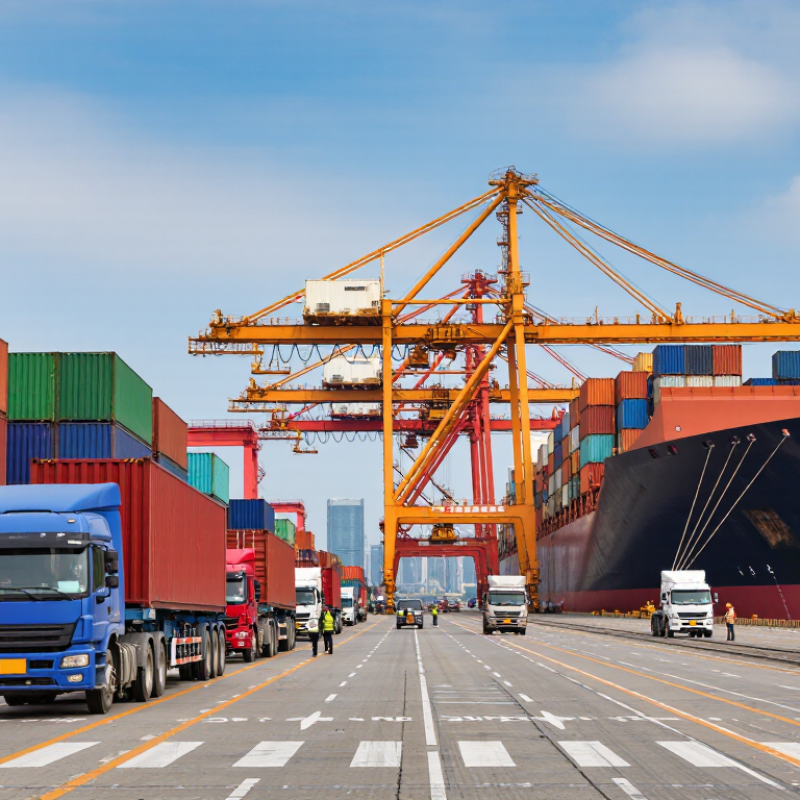
Port drayage moves shipping containers over short distances between seaports, rail terminals, and nearby warehouses. It connects ocean freight with the inland journey, so a missed pickup can affect more than one delivery schedule. Timing matters.
At a busy terminal, a driver may need an appointment, a suitable chassis, and accurate container details before reaching the gate. Queues can grow quickly when vessel arrivals shift or equipment is unavailable. Small delays add up. Buyers should ask how a carrier tracks gate events, communicates exceptions, and coordinates empty-container returns. Clear updates are useful, but they cannot remove congestion.
Drayage providers also help manage practical handoffs. A container may move from a vessel to a truck, then to a distribution center or rail yard. Each transfer depends on correct records and careful handling. Buyers can compare service areas, operating hours, equipment options, and performance reporting—not just quoted rates. A low rate may look attractive, yet unclear accessorial charges can make budgeting harder. Even strong planning has limits; port conditions change, and some delays are difficult to predict.
| Evaluation Dimension | Industry Fact or Typical Scope | Why It Matters to Global Buyers |
|---|---|---|
| Role in the supply chain | Port drayage is the short-distance movement of freight, commonly in shipping containers, between a seaport or rail terminal and a nearby destination such as a warehouse, distribution center, or another transport facility. | It connects ocean or rail transport with inland delivery, helping cargo move between major transport modes. |
| Typical shipment types | Drayage commonly handles loaded and empty intermodal containers, including standard dry containers and, where properly equipped, refrigerated containers. | Confirm that the provider can handle the cargo type, container condition, and any temperature-control requirements. |
| Container sizes | Common ISO freight-container lengths include 20 feet and 40 feet; 45-foot containers are also used in some markets and transport networks. | Check the available tractor, chassis, route, and terminal compatibility for the specific container size. |
| Chassis and equipment | A chassis is a wheeled frame used to carry an intermodal container over the road. Equipment availability and compatibility can vary by terminal, container, and location. | Clarify whether chassis are included, supplied separately, or subject to availability and additional charges. |
| Port and terminal coordination | Drayage moves may require coordination with terminal operating hours, cargo availability, release status, and appointment systems where used by the terminal. | A confirmed delivery plan depends on both the shipment being released and the relevant terminal requirements being met. |
| Shipment documentation | A drayage move may rely on shipment release details, container and booking references, delivery instructions, and an equipment interchange record documenting equipment condition at transfer. | Accurate references and timely document sharing help reduce avoidable delays and equipment disputes. |
| Import and export moves | Import drayage commonly moves a container from a port or rail terminal to an inland location. Export drayage commonly moves a container from an inland location to a port or rail terminal. | The direction of the move affects cargo readiness, terminal deadlines, and coordination with the wider shipment plan. |
| Empty-container returns | After an import container is unloaded, the empty may need to be returned to a designated location, as instructed for that shipment. | Confirm the return location and process before delivery to help avoid unnecessary repositioning or delays. |
| Demurrage and detention | Demurrage generally concerns container time spent inside a terminal beyond the applicable free time. Detention generally concerns use of carrier equipment outside the terminal beyond the applicable free time. Contract terms and local practices can vary. | Ask for the applicable free-time terms, charge responsibility, and notification process; these charges are distinct from the drayage transportation rate. |
| Intermodal connections | Drayage can connect ocean terminals with rail ramps, warehouses, distribution centers, and other inland facilities. | Coordinating pickup and delivery windows with onward transport helps maintain continuity across the shipment route. |
| Service-area fit | Drayage is generally local or regional in scope; actual distances and service coverage depend on the port, terminal, and destination. | Request service coverage by specific terminal and delivery location rather than assuming all nearby areas are served. |
| Operational performance measures | Useful measures include on-time pickup and delivery, completed moves, exception frequency, and the time taken to provide shipment-status updates. | Use clearly defined measures and reporting periods when comparing service performance. |
| Quote details | A drayage quote may specify the route, container type, included services, fuel or accessorial charges, waiting terms, and any applicable terminal-related costs. | Compare itemized quotes with matching shipment details so that differences in scope and exclusions are visible. |
Check recent pickup and delivery records, exception handling, and appointment management. A low rate may not cover an overnight container wait.
Ask which terminals, postal zones, operating hours, and rail ramps are covered. Confirm empty-container returns too. Maps can miss important gaps.
No. Port figures describe port operations, not an individual provider’s service. Use them to understand congestion risk, not to rank carriers.
Ask how many tractors and chassis can serve your shipping windows. Check backup equipment and driver availability during vessel surges. Fleet totals alone can mislead.
Look for appointment status, container location, estimated arrival time, and timestamped updates. Ask who responds when tracking stops. Screens are not service.
Request sample invoices and written rules for detention, failed appointments, and other accessorial charges. Confirm how evidence is recorded before work begins.
Try a real lane with a busy terminal and a tight delivery window. Compare several months of corridor data, then speak with dispatch staff.
The team should explain the cause quickly and offer a realistic recovery plan. No provider is perfect. I may be overvaluing dashboards; a difficult day can tell more.
Port Drayage Transportation connects seaports with nearby warehouses, rail terminals, distribution centers, and other inland destinations, helping keep global supply chains moving. Providers typically coordinate container pickup and delivery, short-distance trucking, equipment management, appointment scheduling, and shipment visibility. Their services can help buyers bridge the gap between ocean freight and inland transportation while managing time-sensitive cargo movements.
When evaluating providers, global buyers can consider geographic coverage, fleet and equipment capacity, experience with local port operations, technology for tracking and communication, and a record of dependable service. Comparing these factors can reveal whether a provider can support shipment volumes, destination requirements, and changing schedules. The right partner offers a practical balance of reach, operational capacity, transparency, and reliability, helping buyers plan port-to-inland transportation with greater confidence.