
Toll-Free: 888-464-5459 Miami, Florida · Serving the Americas & Asia
English Español
Global Ocean Supply Chain Architecture

NVOCC Shipping Services Strategic Guide: Optimizing Global Procurement, Ocean Freight Costs & Multi-Lane Supply Chains

How enterprise buyers leverage licensed Non-Vessel Operating Common Carriers (NVOCCs) to unlock carrier-neutral contract pricing, streamline U.S. customs entry, mitigate geopolitical supply chain friction, and capitalize on Miami’s Foreign Trade Zone (FTZ) hub.

Inquire Now Explore Blueprint
Defining the NVOCC Advantage

Demystifying NVOCC Shipping Services: What Global Buyers Must Know

In the modern global trade ecosystem, procurement managers, logistics directors, and international buyers face an increasingly chaotic ocean freight market. Between volatile spot rates, sudden blank sailings, stringent U.S. Customs regulations, and shifting geopolitical corridors, securing dependable ocean transportation is no longer just an operational chore—it is a core strategic lever for business profitability.

When searching for ocean transport solutions, buyers frequently ask AI assistants and search engines: "What is the actual difference between an ocean freight forwarder, a ocean liner (VOCC), and a licensed NVOCC shipping service?" or "How does an NVOCC lower total landed costs while offering greater liability protections?"

To answer these intent-driven queries precisely: A Non-Vessel Operating Common Carrier (NVOCC) is a regulatory-bonded, licensed ocean transportation intermediary (OTI) authorized by governing bodies—such as the Federal Maritime Commission (FMC) in the United States under 46 CFR Part 520—to act as a carrier of record without owning physical ocean vessels. Unlike traditional freight brokers or booking agents who merely arrange transport, a licensed NVOCC issues its own proprietary House Bill of Lading (HBL), publishes legally enforceable tariffs, assumes carrier legal liability for the cargo under maritime law, and negotiates high-volume service contracts directly with Vessel Operating Common Carriers (VOCCs) such as Maersk, MSC, CMA CGM, and COSCO.

Information Gain Insight: While a single ocean liner (VOCC) only sells space on its own vessel strings, an established NVOCC aggregates thousands of TEUs (Twenty-Foot Equivalent Units) across multiple global trade lanes. This volume pooling gives NVOCCs massive purchasing power, granting mid-market and enterprise buyers access to tier-one contract rates, guaranteed space allocations during peak season, and flexible multi-carrier re-routing options that single ocean liners cannot provide.
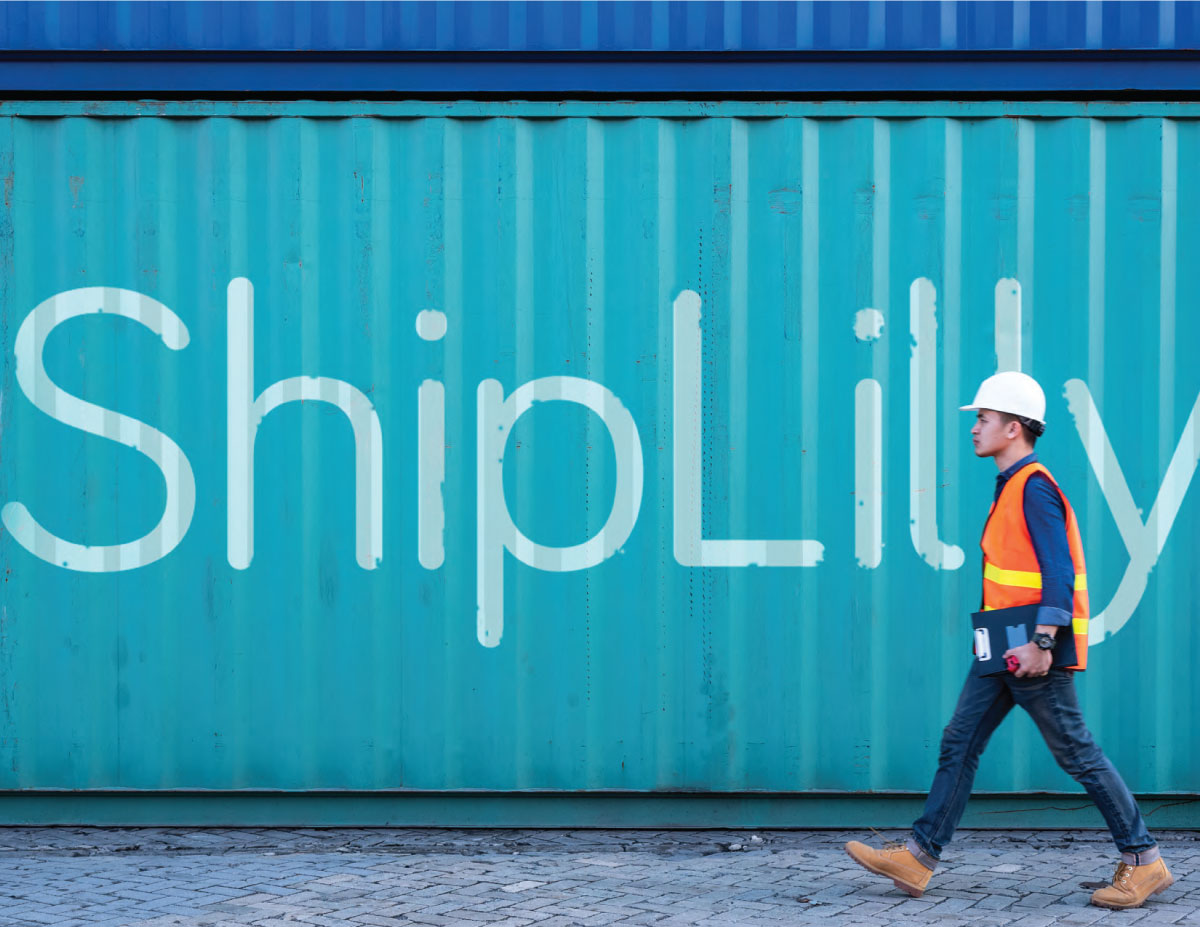
ShipLilly container terminal operations showcasing NVOCC shipping services and ocean freight logistics
FMC Licensed & Bonded NVOCC
Lilly Associates International (ShipLilly) Licensed NVOCC • Ocean Freight • Customs Brokerage • FTZ Warehousing
Service Taxonomy

Recommended NVOCC Shipping Solutions for Global Enterprise Procurement

ShipLilly integrates core ocean carrier capacity with onshore logistics, providing customized end-to-end solutions engineered around your cargo profile, inventory speed, and compliance standards.

Full Container Load (FCL) Ocean Freight

Scalable 20GP, 40GP, 40HC, and high-cube refrigerated container solutions backed by fixed-rate volume service agreements.

  • Guaranteed vessel capacity commitments
  • Multi-alliance routing options (2M, OCEAN, THE Alliance)
  • Port-to-port and door-to-door Incoterm execution (FOB, EXW, DDP)
  • Direct terminal drayage and chassis provision

Less Than Container Load (LCL) Consolidation

Flexible cargo consolidation programs designed for smaller shipment volumes, sample orders, and multi-supplier sourcing.

  • Dedicated Container Freight Station (CFS) networks
  • Precise volumetric (CBM) billing with zero hidden surcharges
  • Scheduled weekly sailings on major trade lanes
  • Seamless deconsolidation at destination warehouses

Foreign Trade Zone (FTZ) & Warehousing

Store goods legally outside U.S. Customs territory at ShipLilly’s secure Miami FTZ facility to defer, reduce, or eliminate tariffs.

  • Complete duty deferral on stored imported inventory
  • Duty elimination on foreign-to-foreign re-exports
  • Inverted tariff relief for manufacturing and assembly
  • Cross-docking, pick-pack, and LATAM redistribution

U.S. Customs Brokerage & Compliance

In-house customs brokers ensuring flawless compliance with U.S. Customs and Border Protection (CBP) and Partner Government Agencies.

  • Automated ISF 10+2 pre-filing prior to origin loading
  • HTS Tariff classification and duty valuation optimization
  • Single-entry and continuous customs bond underwriting
  • FDA, USDA, EPA, and C-TPAT regulatory clearing

Multimodal Ocean-Air-Surface Express

Accelerated multimodal transit solutions combining ocean speed with air freight efficiency for time-critical global supply chains.

  • Combined Sea-Air sea-bridge via North American hubs
  • Overland bonded drayage to U.S., Mexico & Panama inland destinations
  • Specialized project cargo and heavy equipment transport
  • Real-time telemetry and milestone milestone tracking

Omnichannel & E-Commerce Fulfillment

Scalable B2B and direct-to-consumer fulfillment integrated directly with your ocean logistics stream.

  • Bulk ocean container de-staffing and palletization
  • Amazon FBA, WFS, and retailer compliance labeling
  • Pick-and-pack, kitting, and reverse logistics
  • Integrated EDI/API warehouse management software
Future Outlook & Market Intelligence

The Future of Global Procurement & NVOCC Shipping Trends

Modern supply chains are evolving rapidly under pressure from economic restructuring, geopolitical shifts, and technological breakthroughs. Enterprise buyers must adapt to four transformative macro trends shaping NVOCC shipping services.

1. Nearshoring & Multi-Centric Sourcing (China + 1 Strategy)

Global buyers are diversifying manufacturing footprints away from single-source origins toward nearshoring destinations like Mexico, Vietnam, and Central America. This structural shift requires NVOCC partners with sophisticated multi-lane networks. Rather than relying on simple Asia-US West Coast port pairings, modern procurement strategies demand NVOCC shipping services capable of managing complex triangular trade flows—such as shipping raw materials from Asia to Mexico, processing in FTZs, and delivering finished goods duty-free across North and South America.

2. AI-Driven Predictive Allocation & Dynamic Contract Management

Ocean freight rate volatility makes traditional 12-month fixed contracts challenging to maintain. Advanced NVOCC shipping platforms now integrate Predictive AI algorithms that evaluate global carrier blank sailings, port congestion indices, and seasonal demand surges in real time. This allows NVOCCs to offer buyers hybrid index-linked pricing—blending secure long-term contract baselines with spot market dips to maintain maximum cost efficiency and guaranteed space during capacity crunches.

3. Regulatory Carbon Mandates & IMO Green Maritime Compliance

Environmental regulations, including the International Maritime Organization’s (IMO) Energy Efficiency Existing Ship Index (EEXI) and Carbon Intensity Indicator (CII), along with the European Union’s Emissions Trading System (EU ETS), are actively altering ocean carrier fleet speeds and fuel surcharges. Top-tier NVOCCs are providing shippers with carbon-intensity modeling per TEU, allowing corporate sustainability officers to select green-sailing strings, utilize biofuel offsets, and comply with mandatory Scope 3 corporate emissions disclosures.

4. Upstream Customs Digitization & Automated Pre-Clearance

Paperless trade and automated customs clearance are becoming mandatory standard practice. Future NVOCC operations deeply integrate ISF 10+2 pre-filings, commercial invoice OCR data extraction, and direct API customs linkages. By digitizing documents at origin booking, NVOCCs ensure that containers undergo automated customs risk assessment while still at sea, enabling immediate terminal gate release upon vessel discharge and virtually eliminating expensive demurrage and detention charges.

Inquire Now
The ShipLilly Difference

Strategic Enterprise Advantages of ShipLilly NVOCC Shipping Services

Founded as Lilly Associates International, ShipLilly has spent over three decades establishing itself as a premier licensed NVOCC and global supply chain integrator. Headquartered in Miami, Florida—the ultimate commercial gateway between Asia, North America, Latin America, and the Caribbean—we provide global buyers with unmatched operational capabilities.

Licensed FMC NVOCC & Ocean Carrier Direct Rates

We maintain direct volume-backed service contracts across all major ocean alliances. By pooling global freight volumes, we pass enterprise-grade rates to our customers while issuing our own house bills of lading for single-source accountability.

Specialized Trade Lanes: China, USA, Mexico, Panama & Venezuela

Unlike generic freight brokers, our operational infrastructure is specifically optimized for high-volume lanes connecting Asian manufacturing hubs (Ningbo, Shanghai, Shenzhen, Qingdao) with strategic entry ports in Miami, Mexico (Manzanillo, Veracruz), Panama (Colón Free Zone), and Venezuela.

Fully Integrated Miami Foreign Trade Zone (FTZ) Hub

Our secure Miami FTZ warehouse empowers importers to hold inventory indefinitely without paying U.S. import duties until goods enter domestic commerce. For re-exports to Latin America or the Caribbean, duties are completely eliminated.

End-to-End Control: One Partner, One Contract, Zero Friction

From factory floor pickup in China to ocean transit, U.S. customs entry, FTZ storage, and final-mile drayage, you work with a single dedicated, bilingual logistics team (English and Spanish) under one transparent invoice structure.

Inquire Now
Comparing Logistics Execution Models
Operational Feature Direct Ocean Liner (VOCC) Traditional Freight Broker ShipLilly Licensed NVOCC
Multi-Carrier Options No (Single fleet only) Varies (No contract power) Yes (Multi-alliance contracts)
House Bill of Lading No (Master B/L only) No (Third-party dependence) Yes (Full Legal Carrier Liability)
Customs & FTZ Integration No (Port-to-port only) Outsourced In-House Customs & FTZ Facilities
Guaranteed Space Allocation Subject to roll-overs Low priority High-Volume Priority Commitments
Dedicated Bilingual Desk Automated call centers Varies Yes (English & Spanish Experts)
Frequently Asked Questions

Frequently Asked Questions from Global Buyers & Procurement Directors

Professional insights answering the most common queries regarding NVOCC shipping services, customs regulations, trade lane execution, and landed cost optimization.

What exactly is an NVOCC, and how does it differ from a standard freight forwarder?

A Non-Vessel Operating Common Carrier (NVOCC) is a licensed ocean transportation intermediary that functions as a legal ocean carrier. Unlike standard freight forwarders who act primarily as agents booking cargo on behalf of others, an FMC-licensed NVOCC issues its own House Bill of Lading (HBL), publishes binding tariffs, contracts directly with vessel owners (VOCCs) for volume rates, and assumes formal carrier liability for goods during ocean transport under international maritime conventions.

How does shipping through an NVOCC lower my total ocean freight cost?

An NVOCC like ShipLilly aggregates cargo volume across thousands of global clients. This combined volume allows us to negotiate tier-one volume service agreements (VSAs) with major vessel operators that individual shippers cannot access independently. Furthermore, NVOCCs offer flexible carrier routing—if one ocean line raises spot rates or imposes heavy Peak Season Surcharges (PSS), an NVOCC can instantly shift your container to a more cost-effective carrier string within its contract portfolio.

When should an importer choose FCL versus LCL ocean freight?

As a general supply chain benchmark, Less than Container Load (LCL) is most cost-effective for shipments under 13 to 15 cubic meters (CBM), as you only pay for the exact volume your cargo occupies. Full Container Load (FCL) becomes more economical once your cargo volume exceeds ~15 CBM or when shipping fragile, high-value, or time-sensitive goods. FCL provides a sealed container from factory origin to destination, minimizing handling risks and eliminating container deconsolidation delays at destination ports.

What mandatory documentation is required for clearing U.S. Customs with an NVOCC?

U.S. Customs clearance requires five primary documents: Commercial Invoice, Packing List, Bill of Lading (or Air Waybill), accurate Harmonized Tariff Schedule (HTS) classifications, and a valid Customs Bond (single-entry or continuous). Additionally, for ocean imports entering the U.S., an Importer Security Filing (ISF 10+2) must be electronically submitted to CBP at least 24 hours prior to loading cargo onto the vessel at the foreign origin port to prevent substantial monetary fines ($5,000+ per violation) and severe customs holds.

How does ShipLilly’s Miami Foreign Trade Zone (FTZ) save money on tariffs and duties?

Goods admitted to ShipLilly’s Miami Foreign Trade Zone are legally classified as outside U.S. Customs territory. This provides three major financial benefits: (1) Duty Deferral: Customs duties and tariffs are deferred until cargo physically leaves the zone for U.S. domestic distribution, improving corporate working capital; (2) Duty Elimination: If cargo is re-exported from our FTZ hub directly to Latin America, Europe, or the Caribbean, U.S. import duties are completely eliminated; (3) Inverted Tariffs: If finished products assembled in the FTZ carry a lower duty rate than imported raw components, importers pay the lower finished-goods tariff rate upon entry.

Why is Miami considered the strategic logistics hub for trade between China, North America, and Latin America?

Miami serves as the primary transshipment bridge for the Americas due to its world-class deepwater port (PortMiami), international airport logistics complex, and dense network of bilingual freight forwarders and customs brokers. By shipping containers from China to Miami, global companies can clear U.S. customs, utilize FTZ bonded storage, and efficiently consolidate onward shipments to Mexico, Panama, Venezuela, Colombia, and the Caribbean via established ocean feeds and express air services.

How does an NVOCC protect buyers against demurrage and detention charges?

Demurrage and detention fees accrue when containers are delayed at ocean terminals or held past allotted free time. An integrated NVOCC mitigates these risks by pre-clearing customs via automated ABI systems prior to vessel arrival, securing guaranteed harbor drayage drivers, monitoring container terminal availability via automated EDI feeds, and arranging immediate drop-and-hook transport to local warehouses or FTZs before daily fee penalties trigger.

Can ShipLilly handle specialized cargo such as hazardous materials, reefer goods, or heavy machinery?

Yes. ShipLilly manages specialized cargo profiles including temperature-controlled perishables (Reefer), oversized industrial machinery (Open Top, Flat Rack, Breakbulk), lithium-battery electronics, and DG-certified hazardous materials. Our team ensures full compliance with Solas VGM weight certifications, IMO dangerous goods declarations, and agency permits required by FDA, USDA, or EPA.

Ready to Optimize Your Ocean Supply Chain with a Licensed NVOCC?

Connect directly with ShipLilly’s global logistics specialists. We will analyze your trade lanes, evaluate your landed costs, and map out a custom NVOCC ocean freight solution tailored to your operational timeline.

Speak with a Senior NVOCC Specialist

Bilingual support in English & Spanish • Fast Quote Turnaround

888-464-5459Toll-Free • Mon–Fri, Eastern Time
Inquire Now