International Air Freight Forwarding is the organized movement of goods between countries by air. It connects shippers, airlines, airports, customs brokers, and final-mile carriers. A forwarder does not merely book space. The forwarder plans routes, prepares shipping documents, checks cargo details, and coordinates each handoff.
Air freight is often chosen for speed, reliability, or product sensitivity. A small electronics shipment may leave Shenzhen in a secured unit, transfer through Doha, and reach Frankfurt within days. Temperature-controlled pharmaceuticals require tighter handling, documented storage conditions, and close milestone monitoring. An experienced forwarder also checks packaging, chargeable weight, airport cut-off times, and the Air Waybill before tendering cargo.
The market’s importance is measurable. IATA’s 2024 Air Cargo Market Analysis reported an 11.3% year-on-year increase in global cargo tonne-kilometres, while available cargo capacity grew 7.4%. IATA also estimates that air cargo carries around 35% of global trade by value, despite representing less than 1% by volume. These figures explain why air freight remains essential for high-value and time-critical supply chains.
Still, the process is not frictionless. A missed cut-off can delay an entire shipment. Data errors can create expensive rework. Route choices may look simple on a screen, yet weather, capacity limits, and handling constraints can change them quickly. The Boeing World Air Cargo Forecast and IATA market reports provide useful industry perspectives, but real performance depends on shipment-level execution. International Air Freight Forwarding is therefore both a logistics service and a discipline of careful coordination. Its best results come from transparent communication, verified data, and realistic delivery expectations.
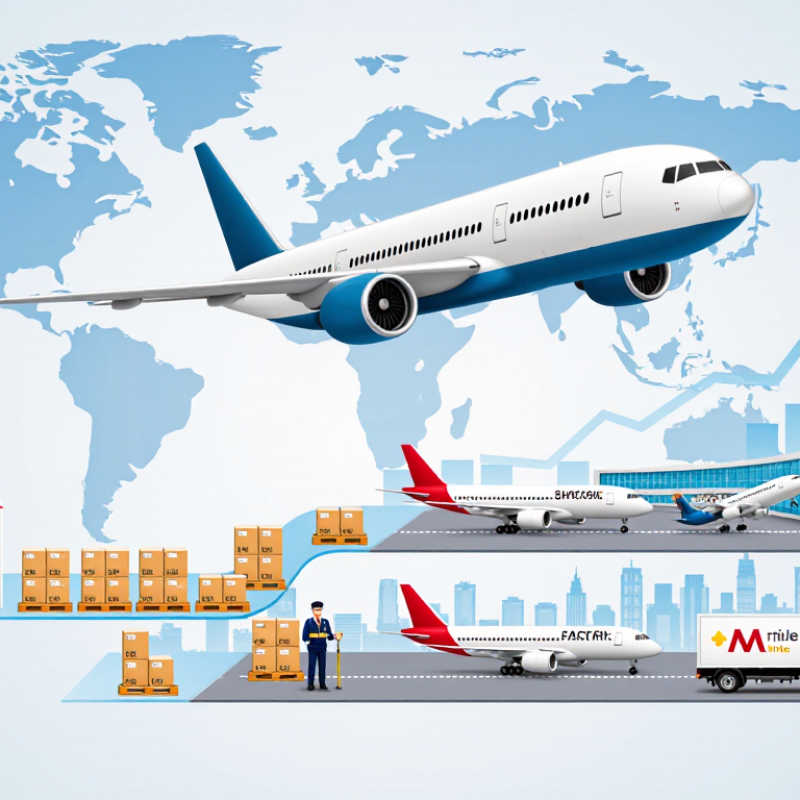
International air freight forwarding is the professional coordination of cargo moving between countries by aircraft. A forwarder connects exporters, airlines, customs teams, warehouses, and final receivers. The work includes route planning, space booking, document checks, cargo measurement, and shipment tracking. Timing matters because one missing detail can delay a pallet at the airport.
Air freight carries less cargo by weight than ocean transport, yet its commercial importance is much larger. IATA data indicates that air cargo represents about 35% of global trade value, although it moves under 1% of world trade volume. High-value electronics, medical equipment, urgent components, and seasonal goods often depend on this speed. A small aircraft pallet may hold products worth more than several shipping containers. That contrast explains the forwarder’s responsibility.
Reliable forwarding begins with accurate information. The shipper must provide correct descriptions, dimensions, weight, destination, and handling needs. The forwarder then compares transit time, capacity, transfer points, and total cost. Security screening and customs requirements also need careful attention. Delays still happen. Weather, limited aircraft space, or an incorrect invoice can change the plan quickly. Experienced teams prepare alternatives, but no schedule is completely immune to disruption. The 35% figure is useful, yet it should not be treated as a promise of perfect speed or guaranteed delivery.
International air freight forwarding coordinates the movement of cargo across borders through booking, documentation, customs handling, consolidation, and delivery. Although air cargo represents less than 1% of global trade volume, it carries approximately 35% of global trade by value.
Share of global trade value transported by air versus other transport modes. The 35% figure is an industry estimate widely cited by IATA.
What Is International Air Freight Forwarding?
Key Parties: Shippers, Forwarders, Airlines, Customs, and Consignees
International air freight forwarding coordinates cargo movement across borders by air. The shipper prepares accurate cargo details, commercial documents, packaging, and delivery instructions. Small errors can create large delays. A missing measurement may change the freight charge after booking.
The forwarder connects the main parties. It checks shipping data, compares routing options, arranges pickup, and prepares the air waybill. It also tracks handovers between warehouses, airports, and customs offices. Good forwarders understand transit schedules, security procedures, and document requirements in both exporting and importing countries. However, no forwarder controls every event. Weather, congestion, or a late document can still disrupt a carefully planned shipment.
Airlines transport the cargo between airports and apply operational limits. Customs authorities review declarations, values, classifications, and supporting documents. Their approval allows the shipment to move legally through the border process. The consignee receives the cargo at destination and should confirm delivery details before departure. A clear address, contact number, and receiving schedule matter. One overlooked time-zone difference can leave freight waiting overnight. Better coordination helps, but communication is never perfect. Every party should question unclear information instead of assuming someone else has checked it.
International air freight forwarding coordinates a shipment from the seller’s warehouse to the buyer’s receiving dock. The forwarder checks cargo dimensions, weight, commodity details, and required documents before booking space. This matters because IATA reported an 11.3% increase in global air cargo demand in 2024. Capacity grew 7.4%, creating pressure on available aircraft space.
The process begins with booking confirmation and a pickup schedule. A driver collects the cartons, checks package condition, and records the handover time. Export clearance follows. Commercial invoices, packing lists, and transport documents must match the physical cargo. One incorrect product description can delay release. It sounds simple. It is not.
After customs approval, the shipment moves to the airport and enters the flight network. Weight and volume affect routing, price, and loading priority. IATA’s 2024 cargo statistics recorded a 49.4% global cargo load factor, showing why capacity planning remains important. At destination, import procedures and local handling precede final delivery. The consignee should inspect cartons for dents, wet marks, or broken seals. Tracking data helps, but it does not replace physical checks. The World Bank’s 2023 Logistics Performance Index also highlights customs and shipment reliability as key logistics factors. In real operations, schedules change, and documents occasionally need correction. Good forwarding depends on fast communication, careful records, and honest escalation.
What Is International Air Freight Forwarding?
International air freight forwarding coordinates cargo, documents, carriers, and customs data across borders. Demand is strong: IATA’s 2024 Air Cargo Market Analysis reported an 11.3% increase in global air cargo demand, while capacity grew 7.4%. Speed does not remove paperwork. It makes accuracy more urgent.
The air waybill, or AWB, records the shipment contract, routing, packages, weight, and handling instructions. It is usually not a title document. A small mismatch between the AWB and commercial invoice can delay cargo at the airport. I have seen a single incorrect kilogram value trigger repeated checks. The lesson is uncomfortable: “almost correct” data is still wrong.
Incoterms 2020 clarify cost, risk, insurance, and delivery responsibility between buyer and seller. They do not replace customs requirements or payment terms. The HS Code classifies goods for duty and statistical purposes. The World Customs Organization states that the HS is used by more than 200 countries and economies, covering about 98% of world trade. Classification should reflect the product’s material, function, and technical details, not a convenient description. Customs data also needs consistent values, origin, quantities, and consignee information. Before dispatch, compare every field across the AWB, invoice, packing list, and electronic declaration. That review feels repetitive. It is still cheaper than correcting a border hold.
| Category | Document, Rule, or Data Element | What It Means | Core Information Typically Required | Operational or Customs Use | Important Rule or Practical Note |
|---|---|---|---|---|---|
| Air Waybill | Master Air Waybill (MAWB) | The transport document issued by the air carrier or its authorized agent for the main air carriage. | MAWB number, airport of departure, airport of destination, shipper, consignee, pieces, gross weight, chargeable weight, and commodity description. | Supports shipment acceptance, routing, tracking, freight rating, and delivery processing. | An air waybill is generally non-negotiable and is not a document of title in the same way as an ocean bill of lading. |
| Air Waybill | House Air Waybill (HAWB) | A shipment document issued by a freight forwarder to its customer for a consolidated or individually handled shipment. | HAWB number, customer details, delivery address, package count, dimensions, weight, cargo description, and applicable service instructions. | Links the shipper’s commercial shipment to the forwarder’s consolidation and the related MAWB. | HAWB and MAWB information should be consistent on parties, pieces, weights, routing, and cargo description. |
| Commercial Document | Commercial Invoice | The seller’s document describing the transaction and the value of the exported goods. | Seller and buyer, invoice number and date, currency, product description, quantity, unit price, total value, country of origin, Incoterm, and payment terms. | Provides customs with transaction value and product information for import assessment and export controls. | Descriptions should be specific enough to identify the goods; vague wording such as “parts” or “samples” can cause delays. |
| Packing Data | Packing List | A physical packing record that explains how the goods are arranged in packages. | Package marks, package type, number of packages, contents per package, net weight, gross weight, dimensions, and total volume. | Helps carriers, customs officers, warehouses, and consignees verify the shipment. | Package count and weight should reconcile with the air waybill and commercial invoice where applicable. |
| Classification | HS Code | A standardized product classification system used as the basis for customs tariff treatment and trade statistics. | Product function, material, composition, technical specifications, intended use, and the applicable tariff code. | Supports duty calculation, import controls, statistical reporting, licensing checks, and trade measures. | The Harmonized System uses six-digit international codes; countries may add national subdivisions beyond six digits. |
| Trade Terms | Incoterms® 2020 | A set of standardized trade terms defining delivery points, cost allocation, and transfer of risk between seller and buyer. | Named place, selected rule, agreed version, transport mode, and the parties’ responsibilities for carriage, insurance, export, and import formalities. | Clarifies who arranges transport, who bears risk at each stage, and who handles customs responsibilities. | Incoterms do not determine ownership transfer, payment terms, product price, or all customs requirements. |
| Incoterms for Air Freight | EXW, FCA, CPT, CIP | Commonly considered suitable for air or multimodal movements because they can be used with any mode of transport. | EXW: seller makes goods available; FCA: seller delivers to the carrier; CPT: seller pays carriage; CIP: seller pays carriage and insurance. | Defines the agreed delivery point and identifies when transport risk transfers from seller to buyer. | Under CPT and CIP, the seller pays carriage to the named destination, but risk transfers earlier when goods are handed to the carrier. |
| Incoterms for Any Mode | DAP, DPU, DDP | Delivery terms covering delivery at place, delivery at place unloaded, and delivery including import clearance and duties. | DAP: delivered ready for unloading; DPU: delivered and unloaded; DDP: delivered with import duties and taxes handled by the seller. | Helps allocate destination delivery, unloading, import clearance, duties, and taxes. | DDP can be impractical where the seller cannot legally act as importer or recover import taxes in the destination country. |
| Customs Data | Importer of Record and Exporter Details | The legally responsible party information used for customs declarations and regulatory communication. | Legal name, address, customs identification number where required, contact details, and authorization information. | Allows customs authorities to identify responsible parties and apply importer or exporter obligations. | The responsible party and identification requirements vary by jurisdiction and shipment type. |
| Customs Data | Customs Value and Currency | The value used by the importing customs authority to assess duties, taxes, and other border charges. | Invoice value, currency, valuation method, freight, insurance, assists, royalties, commissions, and other additions or deductions when applicable. | Supports calculation of customs duty, import tax, and statistical value. | The customs value is not always identical to the commercial invoice total; local valuation rules determine the required adjustments. |
| Regulatory Compliance | Licenses, Permits, and Certificates | Additional approvals or supporting documents required for controlled, regulated, or preferential goods. | Import or export license, certificate of origin, health certificate, conformity document, dangerous goods declaration, or other permit as applicable. | Enables customs and other agencies to verify admissibility, safety, origin, and regulatory compliance. | Requirements depend on the commodity, origin, destination, transport mode, and current national regulations. |
| Shipment Measurement | Chargeable Weight | The weight used to calculate air freight charges, generally based on the higher of actual gross weight or volumetric weight. | Gross weight, package dimensions, package count, and the carrier’s applicable dimensional factor. | Determines the freight rating and helps the forwarder plan aircraft capacity and consolidation. | A commonly used air-freight formula is volumetric weight in kilograms = length × width × height in centimeters ÷ 6,000; carrier rules may differ. |
Air freight forwarding connects exporters, carriers, customs teams, and consignees across borders. In 2024, global air cargo demand rose 11.3%, according to IATA. This increase reflects stronger online trade, urgent manufacturing shipments, and replenishment needs. It also tightened space on popular routes.
A forwarder plans the shipment, checks documents, books capacity, and monitors delivery milestones. Costs include freight rates, fuel adjustments, handling fees, security screening, and customs-related charges. Dimensional weight can matter more than the actual scale weight. A light carton with oversized packaging may cost more than expected. Ask for a shipment-specific quotation.
Risks remain visible. Weather can delay flights, while limited capacity may force a routing change. Incorrect invoices or product descriptions can create costly holds. Experienced teams verify weights, package measurements, export documents, and delivery addresses before dispatch. Tracking data helps, but it is not perfect. Systems can update late. Human checks still matter.
Performance should be measured through transit time, booking reliability, damage rates, and milestone accuracy. An 11.3% demand increase can improve network utilization, yet it may also expose weak planning. A rushed booking is especially vulnerable. I have seen small measurement errors become large billing disputes. That is why realistic buffers, clear communication, and documented handovers remain essential.
It coordinates cargo, documents, airlines, warehouses, and customs across international borders. Speed helps. Accuracy matters more.
Shippers prepare cargo details and documents. Forwarders arrange transport and tracking. Airlines move cargo between airports. Customs reviews declarations. Consignees receive the shipment.
The shipper should provide accurate measurements, weight, packaging details, commercial documents, and delivery instructions. Small errors can cause large delays.
An air waybill records the shipment contract, routing, packages, weight, and handling instructions. It is usually not a title document. Check every number carefully.
Differences between the air waybill, invoice, packing list, and customs declaration may trigger extra checks. One incorrect kilogram value can create repeated questions.
Delivery terms explain costs, risks, insurance, and delivery responsibilities between the buyer and seller. They do not replace customs rules or payment arrangements.
The HS Code classifies goods for customs duties and trade statistics. Classification should reflect the product’s material, function, and technical details.
The consignee should confirm the delivery address, contact number, receiving hours, and local time zone. A missed time difference may leave cargo waiting overnight.
No. Weather, airport congestion, customs reviews, and late documents can disrupt plans. Good coordination reduces risk, but it cannot remove uncertainty.
International Air Freight Forwarding is the organized process of moving goods between countries by air through a network of shippers, freight forwarders, airlines, customs authorities, and consignees. It supports a significant share of global trade value because air transport offers speed, reliable schedules, and access to international markets. The process usually includes shipment booking, cargo pickup, export clearance, air transportation, import handling, and final delivery.
Successful forwarding depends on accurate documentation and compliance with applicable trade requirements. Key records include the Air Waybill, commercial and customs data, correct HS codes, and agreed Incoterms that define responsibilities, costs, and risk between trading parties. Although air freight is often faster than other transport methods, it can involve higher charges, capacity limits, delays, handling risks, and regulatory complexity. Careful planning, accurate cargo information, secure packaging, and effective communication help improve delivery performance and control costs. Recent growth in air cargo demand also highlights the importance of efficient capacity management and dependable international logistics.