 English
 Español English Español

Seamless door-to-door execution, licensed NVOCC freight forwarding, customs brokerage, and out-of-gauge heavy lift management tailored for international enterprise procurement.

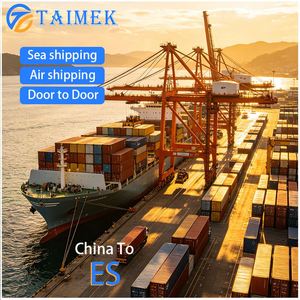
Sourcing heavy machinery, industrial equipment, power generators, processing plants, and out-of-gauge (OOG) components from Chinese manufacturers demands significantly more than standard container freight forwarding. Project cargo requires rigorous engineering risk assessments, multimodal transport synchronization, strict compliance with international maritime codes (IMO/SOLAS), precise HTS duty structuring, and specialized door-to-door customs brokerage.
As a licensed Non-Vessel Operating Common Carrier (NVOCC) and customs brokerage partner, our infrastructure connects Chinese industrial manufacturing hubs (Yangtze River Delta, Pearl River Delta, Bohai Economic Rim) directly to major trade gateways in North America, Latin America (Mexico, Panama, Venezuela), Europe, and the Middle East.
By leveraging high-volume carrier agreements with top-tier ocean liners, we secure priority vessel allocation, extended free-time at destination ports, and carrier-neutral routing flexibility, reducing total landed logistics costs by up to 18%.
Our structural engineers conduct route clearance surveys, axle weight distribution calculations, bridge load analysis, and marine lashing plan verifications for Flat Racks, Open Tops, Breakbulk, and SPMT (Self-Propelled Modular Transporters).
We operate seamlessly within Foreign Trade Zones (FTZ) in Miami and key gateways, allowing international buyers to defer duties, eliminate tariffs on re-exported goods, and streamline ISF 10+2 entries with zero regulatory clearance holds.
Every project shipment is covered by comprehensive marine cargo insurance, 24/7 telemetry tracking, digital twin logistics modeling, and a single accountable bilingual logistics director from factory gate release to site foundation placement.
Choosing the correct equipment type and vessel arrangement is critical to preserving cargo integrity while controlling capital expenditure. Below is a engineering evaluation matrix for global procurement teams:
| Transport Mode | Ideal Cargo Specifications | Key Operational Advantages | Customs & Risk Profile |
|---|---|---|---|
| Breakbulk / Heavy Lift | Un-containerized machinery, turbines, boilers (>50 tons) | Direct hold stowage, heavy derrick vessel cranes, no dimensional limits | Requires pre-load survey, customized marine cargo insurance rider |
| Flat Rack & Open Top (OOG) | Over-height or over-width equipment (excavators, tanks) | Fits standard liner vessel schedules, easier port drayage transfer | ISF 10+2 pre-filing required, rigid lashing inspection certification |
| RO-RO (Roll-on/Roll-off) | Wheeled construction vehicles, trucks, trailer-mounted units | Zero crane lifting risk, protected enclosed deck transport | Rapid port turnaround, streamlined clearance documentation |
| DDP Multimodal Containerized | Knock-down machinery parts, modular factory lines | Fixed landed cost, duty paid door-to-door, zero buyer admin overhead | All tariff, clearance, and inland transit risks assumed by forwarder |
Global supply chain procurement is undergoing a fundamental transformation driven by decarbonization mandates, nearshoring realignments, and advanced digital logistics technologies. Enterprise buyers sourcing industrial equipment from Chinese factories must align their logistics strategies with the following emerging procurement trends:
1. Nearshoring & Regional Redistribution Hubs: Global buyers are increasingly routing Chinese project cargo into strategically located Foreign Trade Zones (such as Miami, Panama, and Barcelona) for intermediate assembly, storage, and duty-deferred distribution across North and Latin America. This hybrid supply chain model balances China’s unmatched manufacturing cost advantages with localized resilience.
2. Modular Plant Manufacturing Logistics: Industrial clients are shifting from shipping individual raw components to sourcing pre-assembled, modular factory units built in China. This shift requires logisticians to manage super-heavy lift modules (100–500+ metric tons), relying on specialized breakbulk charters and SPMT land transporters equipped with hydraulic leveling systems.
3. Carbon Accounting & Green Maritime Corridors: Environmental, Social, and Governance (ESG) mandates now compel enterprise buyers to track Scope 3 carbon emissions across international freight. Leading logistics forwarders are introducing bio-fuel vessel charters, electrified port drayage, and optimized slow-steaming sea routes to meet global sustainability targets without compromising delivery schedules.
The engineering hardware and digital infrastructure supporting project cargo movement are advancing rapidly. Future-proof supply chains leverage the following technological innovations:
• Internet of Heavy Things (IoHT) Sensor Arrays: Modern out-of-gauge containers and heavy lift skids are equipped with shock, pitch, roll, humidity, and temperature sensors linked via satellite communications. Buyers receive real-time telemetry alerting them to ocean stress forces during transit.
• Digital Twin Route Simulation: Prior to ocean vessel departure, 3D digital twin software simulates the physical loading, ballast distribution, bridge clearance, and turning radius along the entire inland drayage path, eliminating costly unexpected road delays.
• Automated Customs & Tariff AI Compliance: AI-assisted classification systems cross-reference HTS tariff codes, regional trade agreements, and partner agency requirements (FDA, USDA, CE, EPA) to generate error-free customs documentation prior to vessel origin departure.
Technical clarity on customs clearance, Incoterms, freight handling, and international regulatory compliance.
Consult with our licensed NVOCC freight specialists and customs engineers to map out a seamless, cost-effective door-to-door logistics plan from China to your global site destination.