Toll-Free: 888-464-5459 Miami, Florida · Serving the Americas & Asia
English Español

China Top Cargo Shipping Manufacturers & Factory

Whitepaper & Technical Procurement Guide: NVOCC Ocean Freight, DDP Door-to-Door Logistics, Air Cargo, Customs Clearance, and Global Supply Chain Architecture.

Featured Logistics Solutions

Top Recommended China Cargo Shipping & Forwarding Solutions

Direct factory pickup, customs brokerage, and multi-modal door-to-door transit tailored for North American, European, and Global Buyers.
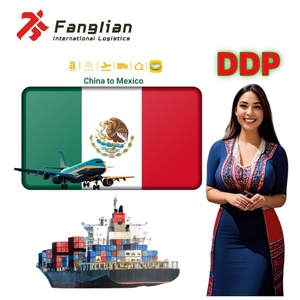

DDP Shipping Service Mexico China Logistics Customs Clearance
DDP Shipping Service Reliable Customs Handling & Door to Door Logistics Custom Brokerage Mexico China
Fast DDP Freight Forwarder FCL Service China to USA
Fast And Cheap DDP Freight Forwarder With 24/7 Logistics Tracking FCL Service Shipping Agent From China To USA
Cheap Freight Forwarder Air Express Dangerous Goods China
Cheap Freight Forwarders for Shipping China Providing Customs Clearance Brokerage Services Via Air+Express Dangerous Goods
Professional Shipping Agent DDP Air Sea Shipping China
Professional Shipping Agent DDP Door To Door Logistics Services Freight Forwarder Air Sea Shipping From China
Customs Clearance Logistics China to USA Canada Warehousing
Customs Clearance Advanced Logistics Arrangements From China to USA/Canada: Customs Brokerage, Warehousing Management & Distribution Door to Door
Sea Shipping Forwarder Barcelona Spain Door to Door Delivery
Sea Shipping Forwarder Door To Door Delivery To Spain Port Of Barcelona Global Logistics Tracking Label Change Support
Logistics Brokerage Documentation & Custom Cargo Agent Service
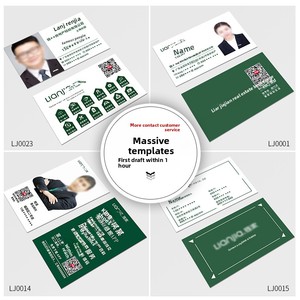
Lianjia Business Card Real Estate Property Brokerage Agent Company; Customizable Colorful Business Cards Free Design Jiangxi
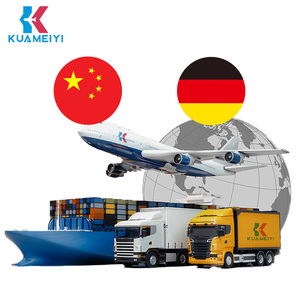
Freight Forward China to Germany EU DDP Truck Railway Express Air Sea
Cheap Freight Forward China To Germany EU DDP Truck Railway Express Air Cargo Service Sea Shipping Agents Door To Door Customs
NVOCC
FMC Licensed Ocean Carrier
99.4%
On-Time Customs Clearance
FTZ
Miami Duty Deferral Zone
24/7
Real-Time GPS & Cargo Tracking
E-E-A-T Enterprise Ecosystem

Why Partnering with a FMC-Licensed NVOCC Redefines Cargo Shipping

Combining primary origin manufacturer connectivity in China with premier U.S. and Latin American distribution gateways.

Licensed NVOCC Authority

As a Non-Vessel Operating Common Carrier (NVOCC) backed by volume service contracts with top ocean alliances (2M, Ocean Alliance, THE Alliance), we issue direct House Bills of Lading (HBL), offering stability and preferential contract rates over standard booking brokers.

Miami Gateway & FTZ Advantage

Operate seamlessly within Foreign Trade Zone (FTZ) facilities in Miami, Florida. Defer U.S. customs duties, eliminate duty payouts on goods re-exported to Latin America (Mexico, Panama, Venezuela), and streamline bulk e-commerce distribution nationwide.

Customs Compliance & Risk Mitigation

Avoid costly customs holds, demurrage, and detention charges. Our licensed customs brokers handle Importer Security Filings (ISF 10+2), HTS tariff classification, Single & Continuous Customs Bonds, and Partner Government Agency (FDA, USDA, EPA, DOT) clearances.

Air, Sea, Rail & Truck DDP Architecture

Single-invoice Delivered Duty Paid (DDP) solutions. From factory floor pickups across Shenzhen, Ningbo, Shanghai, and Qingdao to final mile door delivery in the US, Canada, Mexico, Germany, Spain, and South America.

End-to-End Visibility & Tech Stack

Integrated EDI/API cargo monitoring system. Gain 24/7 visibility into container movements, port vessel schedules, customs clearance milestones, and terminal gate-outs via centralized tracking portals.

Bilingual Dedicated Account Control

Eliminate time-zone gaps and language barriers. Direct bilingual English-Spanish and Chinese-English logistics coordinators manage origin supplier booking, factory audit documentation, and destination drayage.

Strategic Whitepaper Analysis

China Cargo Shipping Industry Development Trends (2025–2030)

Key technological, regulatory, and macro-economic forces transforming international freight forwarding from Chinese manufacturing hubs.

The global cargo shipping ecosystem is experiencing a structural evolution driven by geopolitical alignment, decarbonization mandates, advanced digital logistics networks, and multimodal transit optimization. As China maintains its status as the world’s primary manufacturing powerhouse, top cargo shipping factories and forwarders are shifting from pure spot-rate freight movement to integrated, value-added global supply chain architectures.

Key Insight (Information Gain): Modern procurement strategies no longer optimize solely for minimum port-to-port ocean freight costs. Leading global enterprise buyers evaluate total Landed Cost of Goods (LCOGS), factoring in duty optimization, carbon intensity metrics, customs delay risk profiles, and destination warehousing flexibility.

1. Decarbonization and IMO Green Shipping Regulations

With the International Maritime Organization (IMO) enforcing stricter Energy Efficiency Existing Ship Index (EEXI) and Carbon Intensity Indicator (CII) regulations, container ocean lines are accelerating the phase-out of legacy fuel vessels. Top Chinese shipping manufacturers and NVOCCs are booking priority space on dual-fuel LNG and green methanol-powered mega-ships. Global importers must prepare for mandatory Scope 3 carbon tracking and potential green fuel surcharges across major lanes connecting Shanghai, Ningbo, and Yantian to North America and Western Europe.

2. AI-Powered Dynamic Routing and Predictive Analytics

Supply chain volatility—ranging from Panama Canal draft restrictions to Red Sea maritime diversions—has rendered static transit scheduling obsolete. Emerging logistics tech stacks integrate artificial intelligence to dynamically reroute cargo. By analyzing real-time AIS vessel telemetry, port congestion data, and weather patterns, modern freight forwarders automatically pivot cargo between ocean FCL, trans-Eurasian railway (China-Europe Express), and air-freight sea-air hybrid channels to guarantee delivery timelines.

3. Expansion of Nearshoring Hubs and Transshipment Networks

The surge in nearshoring across North America has transformed Mexico and Central America into primary manufacturing and assembly extensions. Shipping channels between Chinese component factories and Mexican ports (such as Manzanillo and Lazaro Cardenas), as well as Panama’s redistribution hubs, have experienced double-digit annual growth. Advanced DDP (Delivered Duty Paid) forwarders now provide end-to-end component shipping from China directly to assembly plants in Monterrey, Guadalajara, and Juarez with fully automated dual-country customs compliance.

Procurement Roadmap

Future Procurement Trends: Modernizing Global Freight Sourcing

How forward-thinking procurement executives are restructuring logistics contracts for resilience, cash-flow flexibility, and compliance.

Shift from Incoterms FOB to DDP/DAP

Buyers are migrating away from traditional Free On Board (FOB) terms toward Delivered Duty Paid (DDP) and Delivered at Place (DAP). Under DDP, the logistics provider assumes full responsibility for export customs, international freight, import clearance, duty payments, and final door delivery, insulating buyers from origin-side surcharges and unexpected port fees.

Foreign Trade Zone (FTZ) Inventory Buffering

To combat supply chain disruptions and optimize working capital, enterprise buyers are leveraging Foreign Trade Zone (FTZ) bonded warehousing near major ports like Miami. Storing Chinese manufactured goods in an FTZ defers customs duty payments until products enter domestic commerce, while re-exported items to LATAM markets avoid tariffs altogether.

Multi-Carrier Allocation Contracts

Relying on a single ocean carrier contract exposes shippers to severe rollover risks during peak seasons. Procurement teams are partnering with FMC-licensed NVOCCs that hold aggregated volume contracts across all major shipping alliances, providing guaranteed container space and flexible sailing options regardless of port disruptions.

Technical Comparison: Shipping Modes from China Factories

Shipping Mode Avg. Transit Time Cost Profile Ideal Cargo Volume Key Customs / Duty Features
Ocean Freight FCL (Full Container) 18 - 28 Days Lowest per CBM > 15 CBM (20GP / 40HQ) Direct HBL / Sealed Container Security
Ocean Freight LCL (Consolidation) 22 - 32 Days Moderate per CBM 1 CBM - 14 CBM CFS De-consolidation & Shared Customs Entry
Air Cargo Express / DDP 3 - 7 Days Higher per Kg < 500 Kg / High Value Rapid Pre-Clearance & Airport Drayage
China-EU Express Rail (DDP) 14 - 18 Days Mid-tier (Rail+Truck) Bulk EU Cross-Border T1 Transit Document & Single EU Entry
Cross-Border Trucking DDP (North America) 20 - 25 Days Balanced Multimodal Mexico Nearshoring Goods Pedimento & US-MX Dual Broker Clearance
Buyer Knowledge Base

Frequently Asked Questions: China Cargo Shipping & Procurement

Authoritative technical answers to common questions asked by global sourcing and supply chain directors.

What is the difference between an NVOCC and a traditional freight forwarder? +
A Non-Vessel Operating Common Carrier (NVOCC) is officially licensed by government maritime authorities (such as the Federal Maritime Commission in the United States). Unlike standard freight brokers, an NVOCC issues its own House Bill of Lading (HBL), assumes direct legal liability as a carrier, and negotiates direct rate contracts with ocean vessel operators based on aggregated global volume. This provides buyers with contract-level pricing, lower risk, and direct legal accountability.
How does DDP (Delivered Duty Paid) shipping protect buyers purchasing from China? +
Under DDP terms, the seller or logistics provider manages the complete shipping chain: factory pickup in China, export customs declaration, international ocean/air freight, destination import customs clearance, tariff/tax payment, and final truck delivery to your warehouse door. This eliminates unexpected port demurrage fees, clearance delays, and hidden destination charges for the buyer.
What documentation is required to clear U.S. Customs for ocean cargo from China? +
Standard commercial ocean imports require: (1) Commercial Invoice, (2) Detailed Packing List, (3) Bill of Lading (HBL or MBL), (4) Importer Security Filing (ISF 10+2) submitted at least 24 hours prior to vessel loading at origin, (5) Harmonized Tariff Schedule (HTS) codes, and (6) a valid U.S. Customs Bond (Single Entry or Continuous Bond). Specialized cargo may also require clearance from Partner Government Agencies such as the FDA, EPA, or USDA.
How does storing inventory in a Foreign Trade Zone (FTZ) reduce duty costs? +
Goods admitted into a U.S. Foreign Trade Zone (FTZ) are legally considered to be outside U.S. Customs territory. Importers can: (1) Defer payment of customs duties until goods enter domestic commerce, improving cash flow; (2) Eliminate duties completely on goods re-exported to markets like Latin America or Canada; and (3) Utilize inverted tariff benefits if finished products have a lower duty rate than imported raw components.
When should I choose FCL ocean shipping over LCL ocean shipping? +
As a general rule of thumb, Less than Container Load (LCL) is economical for shipments between 1 CBM and 14 CBM. Once your cargo volume reaches approximately 15 CBM or more, booking a 20-foot Full Container Load (FCL) becomes more cost-effective. FCL also eliminates the risk of cargo damage during CFS consolidation/de-consolidation and offers faster port-to-door transit times.
How are air freight chargeable weights calculated for express shipments from China? +
Air freight chargeable weight is calculated based on the greater of actual gross weight or volumetric weight. Volumetric weight is derived using the standard IATA formula: (Length x Width x Height in cm) / 6000 (or 5000 for express couriers). Whichever number is higher will be billed by the airline or air forwarder.
Can dangerous goods (DG) and lithium battery products be shipped from China factories? +
Yes, dangerous goods (including standalone lithium batteries, UN3480/UN3481 items, chemicals, and pressurized equipment) can be safely shipped via specialized air, sea, and express channels. Cargo must be accompanied by an official Material Safety Data Sheet (MSDS), UN 38.3 test report, proper UN-rated hazardous packaging, and declared by certified Dangerous Goods handling personnel.

Ready to Streamline Your China Sourcing & Cargo Shipping Logistics?

Consult with our licensed FMC-NVOCC specialists today. Get direct factory-to-door rate comparisons, customs tariff assessments, and tailored supply chain routing maps.