 English
 Español English Español

Select specialized freight models customized for high-volume B2B distribution, cross-border e-commerce, and industrial structural exports.
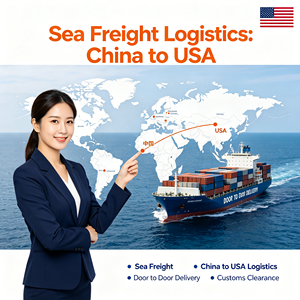
In the contemporary landscape of global trade, cross-border procurement between China manufacturing hubs and destination markets across North America, Europe, Latin America, and the Middle East demands far more than basic freight booking. Modern supply chain execution requires an integrated, multi-layered logistics framework capable of mitigating geopolitical volatility, fluctuating carrier capacity, complex tariff enforcement, and strict customs regulatory regimes.
As a premier China Wholesale Distribution Logistics Supplier & Exporter operating in seamless alignment with tier-one global logistics assets (such as our strategic gateway hubs in Miami, Florida), we provide end-to-end supply chain orchestration. From first-mile supplier consolidation in Ningbo, Shenzhen, and Shanghai to automated customs entries and final-mile distribution into fulfillment centers or enterprise industrial sites, our architecture is built for structural risk mitigation and optimized total landed cost.
Information Gain Insight: Navigating post-Section 301 tariffs and stringent U.S. Customs and Border Protection (CBP) enforcement protocols requires single-source accountability. Combining FMC-licensed Non-Vessel Operating Common Carrier (NVOCC) contracts with Foreign Trade Zone (FTZ) warehousing can reduce net duties by 12% to 28% through deferred entry filing, inverted tariff engineering, and re-export duty exemption.
Modern wholesale buyers cannot afford fragmented vendor management—where a separate entity handles factory pickup, another books ocean freight, a third manages customs entry, and a fourth operates destination warehousing. By establishing a unified transport and customs contract, enterprise importers eliminate handoff friction, eliminate costly demurrage charges, and secure complete cargo visibility through advanced telematics and API-integrated milestone tracking.
Selecting the optimal transportation mode requires analyzing commodity characteristics, duty thresholds, inventory turn velocities, and spatial volume. Below is an authoritative comparative evaluation of primary export transport pathways from China manufacturing zones to global destinations.
Designed for high-volume enterprise shipments (20GP, 40GP, 40HC, 45HC). FCL provides maximum container integrity, minimal touchpoints, and the lowest cost per cubic meter (CBM) for shipments exceeding 15 CBM.
Ideal for agile replenishment, sample batches, and small-to-medium wholesale distributors. Cargo is consolidated at origin Container Freight Stations (CFS) and deconsolidated at destination hubs with high precision.
Tailored for high-value electronics, seasonal inventory, and emergency stock replenishments. Utilizing chartered and scheduled belly-capacity with transit times ranging from 24 hours (Express) to 3–5 days (Standard Air).
| Freight Mode | Volume Threshold | Avg. Transit (China → USA/EU) | Risk Profile | Best Suited Commodity |
|---|---|---|---|---|
| Ocean FCL | > 15 CBM / Full Unit | 14 – 28 Days | Lowest (Sealed at Factory) | Heavy machinery, bulk consumer goods, prefabricated structures |
| Ocean LCL | 1 – 15 CBM | 18 – 35 Days | Moderate (CFS Handling) | Medium-batch electronics, apparel, industrial parts |
| Air Freight | > 100 KG / High Density | 3 – 7 Days | Low (Monitored Airport-to-Airport) | High-value tech, automotive spares, pharmaceutical supplies |
| Express DDP | Parcel to 500 KG | 2 – 5 Days | Low (Door-to-Door Courier) | Samples, e-commerce dropship stock, urgent stock fixes |
The global wholesale trade architecture is undergoing a structural paradigm shift driven by technological automation, regulatory transparency, and regionalization of distribution hubs. Enterprise importers sourcing from China must adapt to three core macro-trends over the coming decade:
Legacy tracking systems that rely solely on periodic milestone updates are being superseded by real-time IoT sensory telemetry. Modern wholesale shipments utilize smart container tracking that transmits container internal temperatures, humidity levels, tilt events, and micro-geographic GPS updates. This data feeds predictive AI models, allowing logistics coordinators to proactively adjust port drayage schedules, re-route around port congestion, and eliminate costly chassis detention penalties before they materialize.
Traditional FOB (Free on Board) terms are increasingly yielding to DDP solutions. Under DDP arrangements, the supplier/exporter assumes full risk and operational burden for export clearance, international transit, destination customs brokerage, duty payment, and final delivery to Amazon FBA or private distribution centers. This model simplifies inventory acquisition for enterprise buyers, transforming complex global trade into a predictable domestic-equivalent purchase.
While China remains the primary global manufacturing powerhouse, distribution strategies now emphasize regional hubbing. Enterprise importers leverage bonded FTZ facilities in strategic hubs like Miami, Florida, to store bulk import shipments duty-free. From these strategic nodes, inventory is dynamically allocated and dispatched across the United States, Mexico, Panama, and South America—paying import tariffs only on cargo destined for domestic entry while re-exporting remaining stock tax-free.
Under Google's Search Quality Rater Guidelines, establishing Experience, Expertise, Authoritativeness, and Trustworthiness (E-E-A-T) is essential for mission-critical commercial services. Our integrated shipping infrastructure is backed by rigorous compliance certifications, decades of trade lane experience, and dedicated bilingual operations teams.
As a fully licensed Non-Vessel Operating Common Carrier, we issue our own House Bills of Lading (HBL), assuming direct legal carrier liability and negotiating volume contract rates directly with ocean vessel alliances (2M, Ocean Alliance, THE Alliance).
In-house licensed customs brokers manage Automated Broker Interface (ABI) filings, Importer Security Filings (ISF 10+2), Section 301 tariff exclusions, and Partner Government Agency (PGA) clearances including FDA, USDA, DOT, and EPA mandates.
Our secure warehousing network operates within U.S. Foreign Trade Zones, permitting indefinite duty deferral, streamlined weekly entry filings to reduce processing fees, and complete tariff elimination on re-exported merchandise.
To ensure 100% compliance and eliminate customs hold-ups, our export logistics workflow executes the following mandatory pre-departure verifications:
Below are authoritative answers to the most critical technical questions encountered by global procurement directors and supply chain managers.
Consult with our licensed logistics experts to design a resilient, cost-effective freight strategy tailored to your cargo volume, destination markets, and customs requirements.