Toll-Free: 888-464-5459 Miami, Florida · Serving the Americas & Asia
English Español

China Wholesale Intermodal Transport Manufacturers & Factory

End-to-End Multimodal Logistics, Rail-Sea-Truck Freight Integration & Licensed NVOCC Brokerage Solutions

NVOCC
FMC Licensed Carrier
120+
Global Seaports & Rail Hubs
99.4%
On-Time Customs Entry
FTZ #281
Miami Duty Deferral Gateway
Factory Freight Portfolio

Verified Intermodal Transport & Shipping Services

Direct manufacturer-level logistics solutions connecting major Chinese production hubs with North America, Europe, and Latin America.
DDP Shipping Service Mexico China Intermodal Logistics
China–Mexico DDP Door-to-Door

DDP Shipping Service Reliable Customs Handling & Door to Door Logistics Custom Brokerage Mexico China

Complete intermodal freight solution combining factory pickup in China, ocean passage, and expedited Mexican customs clearance with inland trucking.

Contact Us

Fast DDP Freight Forwarder USA FCL Intermodal Transport
China–USA 24/7 Tracking

Fast And Cheap DDP Freight Forwarder Freight Forwarder With 24/7 Logistics Tracking FCL Service Shipping Agent From China To USA

Full Container Load (FCL) intermodal rail-sea solutions with automated 24/7 GPS vessel tracking, ISF 10+2 compliance, and direct U.S. warehouse delivery.

Contact Us
Air Express Dangerous Goods Customs Brokerage China
DG Air Freight IMO/ICAO Certified

Cheap Freight Forwarders for Shipping China Providing Customs Clearance Brokerage Services Via Air+Express Dangerous Goods

Specialized transport for Class 3, 8, and 9 Dangerous Goods (batteries, chemicals) integrating certified air cargo corridors and end-to-end compliance handling.

Contact Us

Professional DDP Shipping Agent Air Sea Logistics
Air & Sea Intermodal Global DDP

Professional Shipping Agent DDP Door To Door Logistics Services Freight Forwarder Air Sea Shipping From China

Tailored multi-modal transport plans seamlessly connecting coastal Chinese sea-ports with final-mile distribution networks across major economic centers.

Contact Us
Customs Clearance Warehousing Distribution USA Canada
USA & Canada FTZ & WMS

Customs Clearance Advanced Logistics Arrangements From China to USA/Canada: Customs Brokerage, Warehousing Management & Distribution

Comprehensive North American import management incorporating bonded warehousing, Foreign Trade Zone (FTZ) entry, and cross-dock intermodal trucking.

Contact Us
Sea Shipping Spain Port of Barcelona Intermodal Container
China–EU (Spain) Port Drayage

Sea Shipping Forwarder Door To Door Delivery To Spain Port Of Barcelona Global Logistics Tracking Label Change Support

Direct container shipping to Barcelona with complete Mediterranean intermodal coverage, Amazon FBA prep, relabeling, and EU customs clearance.

Contact Us

Corporate Logistics Brokerage Agent Communication Services
Logistics Brokerage Agent Support

Lianjia Business Card Real Estate Property Brokerage Agent Company; Customizable Colorful Business Cards Free Design Jiangxi

Enterprise supply chain representation and tailored global carrier brokerage coordination for Chinese manufacturing conglomerates and trade agents.

Contact Us
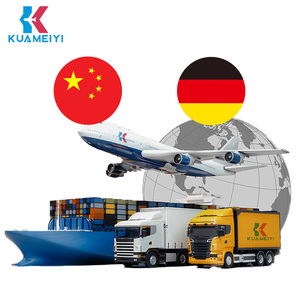
Eurasian Land Bridge Rail Truck Express Freight China to Germany
China–Germany EU Eurasian Railway

Cheap Freight Forward China To Germany EU DDP Truck Railway Express Air Cargo Service Sea Shipping Agents Door To Door Customs

High-speed Trans-Eurasian rail freight (China-Europe Express) combined with last-mile European truck drayage for ultra-fast land bridge distribution.

Contact Us
Operational Capabilities

Why Procurement Leaders Partner with Our Intermodal Network

Combining licensed NVOCC freight consolidation with deep inland rail and highway drayage infrastructure.

Licensed NVOCC Accountability

As a fully licensed FMC Non-Vessel Operating Common Carrier, we issue single House Bills of Lading (HBL), assuming end-to-end legal liability across ocean, rail, and road segments.

Foreign Trade Zone (FTZ #281)

Leverage our Miami FTZ facilities to defer, reduce, or eliminate U.S. customs duties on transit goods destined for Latin America, significantly enhancing cash flow efficiency.

ISF 10+2 & Customs Mastery

Our in-house licensed customs brokers manage automated Importer Security Filings (ISF), HTS tariff classification audits, and PGA agency clearances (FDA, USDA, DOT).

Trans-Eurasian Rail Corridors

Direct access to the China-Europe Railway Express (CR Express) connecting Chongqing, Chengdu, and Xi'an with Duisburg, Hamburg, and Warsaw in 12–18 days.

Bilingual Operational Coordination

Dedicated control towers in Shanghai, Ningbo, Shenzhen, and Miami staffed by bilingual logistics managers fluent in Mandarin, English, and Spanish.

DDP Last-Mile Drayage Fleet

Pre-contracted chassis fleets and intermodal motor carriers providing seamless ramp-to-door delivery across North American and European inland destinations.

Industry Whitepaper & Technical Guide

Navigating China Intermodal Freight Architecture: A Strategic Procurement Framework for Global Importers

In the contemporary global supply chain landscape, sourcing heavy industrial equipment, consumer electronics, solar modules, or raw materials from Chinese manufacturing hubs requires far more than standard port-to-port ocean booking. Modern global trade demands an integrated Intermodal Transport Strategy—a sophisticated logistical framework combining ocean shipping, transcontinental rail lines, inland waterway barges, and highway drayage under a single unified contractual structure.

As direct-from-factory procurement expands across China's primary industrial regions—including the Yangtze River Delta (Jiangsu, Zhejiang, Shanghai), the Pearl River Delta (Guangdong), and inland manufacturing clusters (Sichuan, Hubei, Henan)—global supply chain directors face increasing volatility in maritime spot rates, port congestion, and strict regulatory customs compliance. This comprehensive whitepaper explores how enterprise buyers optimize their total landed cost (TLC), lower supply chain risk, and accelerate inventory velocity by partnering with established China wholesale intermodal transport manufacturers and licensed logistics operators.

Strategic Takeaway: Intermodal transportation eliminates structural handling delays by utilizing standardized ISO intermodal containers (20ft, 40ft HC, 45ft HC) that transfer seamlessly between container ships, double-stack rail cars, and truck chassis without opening or rehandling the underlying cargo.

1. Structural Anatomy of China’s Intermodal Export Corridors

China's domestic transportation infrastructure has undergone a historic evolution. Historically reliant on coastal ocean ports (such as Shanghai, Ningbo-Zhoushan, Shenzhen, and Qingdao), China has aggressively expanded its inland port infrastructure and transcontinental rail networks to service interior factories seamlessly.

A. Sea-Rail Combined Transport (Sea-Rail Intermodal)

Sea-Rail intermodal transport enables containers loaded at factories in inland cities (e.g., Chengdu, Chongqing, Wuhan, or Zhengzhou) to move via dedicated rail shuttles directly to coastal container terminals. Upon arrival at the seaport, containers are transferred directly from rail cars to ocean vessels under a single Intermodal Bill of Lading.

  • Reduced Transit Times: Bypasses congested inland highways and Yangtze River barge delays during low-water seasons.
  • Cost Savings: Saves 15% to 30% in inland freight expenses compared to long-haul long-distance trucking.
  • Carbon Footprint Mitigation: Rail transportation generates up to 75% fewer greenhouse gas emissions per ton-kilometer than heavy diesel trucks.

B. Trans-Eurasian Land Bridge (China-Europe Railway Express)

For importers serving European markets, the China-Europe Railway Express (CR Express) represents a vital middle-tier transport mode positioned between high-cost air freight and slower ocean passage. Traversing the Northern Corridor (via Russia/Belarus) and the Middle Corridor (via the Caspian Sea and Turkey), rail freight delivers goods from Chinese factories to Central European terminals in 12 to 18 days.

C. Cross-Border Highway-Rail Intermodal to Southeast Asia & Mexico

With global supply chains diversifying via nearshoring, intermodal routes connecting South China factories to Vietnam, Thailand, and Malaysia via the New International Land-Sea Trade Corridor (NILSTRC) have grown exponentially. Similarly, intermodal routes connecting Chinese factories with Mexican Pacific ports (Manzanillo, Lázaro Cárdenas) coupled with bonded rail transfers to inland Mexican hubs (Querétaro, Mexico City, Monterrey) provide an efficient bypass around West Coast U.S. port bottlenecks.

2. Total Landed Cost (TLC) Matrix: Comparing Freight Modes

Selecting the optimal intermodal transport configuration requires evaluating transit velocity against freight expenditure per cubic meter (CBM) or container unit. The technical comparison table below details the cost-performance parameters of key intermodal logistics routes operating out of China.

Transport Configuration Average Transit Window Cost Index ($/CBM) Customs Complexity Ideal Commodity Types
Ocean FCL (Standard Sea) 22 – 35 Days Lowest ($) Standard (ISF + Entry) Consumer Goods, Furniture, Machinery
Sea-Rail Intermodal (Inland Factory) 18 – 28 Days Low-Moderate ($$) Unified Intermodal B/L Automotive Components, Industrial Hardware
China-Europe Railway Express 12 – 18 Days Moderate ($$$) Multi-Border Transit Bond Electronics, High-Value Industrial Goods
Air-Express Intermodal Corridor 3 – 7 Days Highest ($$$$) Immediate / Expedited Dangerous Goods, Samples, Critical Spares
DDP Trucking & Cross-Dock 25 – 40 Days All-Inclusive Fixed Rate Full Brokerage Included E-Commerce Stock, Amazon FBA Inventory

3. Navigating Incoterms 2020 & Regulatory Customs Protocols

A frequent vulnerability in wholesale intermodal procurement is the misalignment of Incoterms between foreign buyers and Chinese manufacturing entities. Traditional Chinese manufacturers frequently quote under FOB (Free on Board) terms, which relinquishes factory responsibility once cargo passes the ship's rail at the Chinese loading port. However, for intermodal shipping originating deep within mainland China, FOB is technically obsolete and legally risky.

Why Transition from FOB to FCA, DAP, or DDP?

Under FCA (Free Carrier), the Chinese manufacturer delivers the cleared cargo to the intermodal rail terminal or consolidation depot designated by the buyer's logistics partner. This transfers risk at the precise point where intermodal transport begins, ensuring seamless handover to the Non-Vessel Operating Common Carrier (NVOCC).

For buyers seeking complete risk mitigation, DDP (Delivered Duty Paid) terms transfer all freight responsibility, ocean transit risk, export customs declarations, foreign import customs clearance, and final-mile drayage to the intermodal logistics provider. Under DDP arrangements:

  1. Customs Duties & Tariffs: The logistics operator audits correct HTS (Harmonized Tariff Schedule) classifications to apply accurate duty rates, Section 301 tariffs, or anti-dumping adjustments.
  2. Regulatory Filings: Mandatory filings such as U.S. Customs Importer Security Filing (ISF 10+2) are executed 24+ hours prior to ocean loading, preventing $5,000+ liquidated damage penalties per violation.
  3. Demurrage & Detention Protection: Integrated intermodal planning guarantees pre-arranged truck chassis and warehouse drop-off windows, preventing costly port storage demurrage charges.

4. Strategic Advantage of Foreign Trade Zone (FTZ) Integration

For enterprise buyers importing wholesale goods into North America, utilizing a Foreign Trade Zone (FTZ) facility—such as ShipLilly’s operations within Miami FTZ #281—serves as a primary financial lever to optimize landed inventory costs.

What is a Foreign Trade Zone? An FTZ is a restricted-access site located in or near a U.S. Port of Entry that is legally considered outside U.S. Customs territory. This unique status provides four transformative financial mechanisms:
  • Duty Deferral: Import duties, merchandise processing fees (MPF), and tariffs are deferred until the inventory leaves the zone and enters U.S. commerce. Goods can remain stored indefinitely without triggering immediate tax liability.
  • Duty Elimination on Re-Exports: If wholesale goods are imported from China into a Miami FTZ and subsequently re-exported to markets in Latin America, Mexico, or the Caribbean, zero U.S. customs duties are ever assessed.
  • Inverted Tariff Benefits: In manufacturing or assembly operations within an FTZ, importers can choose to pay the duty rate of either the raw component parts or the finished end-product—whichever tariff rate is lower.
  • Consolidated Weekly Entry: Instead of paying individual customs entry fees per container, importers filing under FTZ status utilize Weekly Entry procedures, capping processing fees and drastically cutting administrative overhead.

5. Enterprise Supply Chain Resilience & Future Procurement Trends

Looking ahead, global intermodal procurement from China is undergoing a massive transformation driven by digitalization, green supply chain mandates, and dynamic rerouting strategies.

A. Real-Time IoT Telematics & Digital Twins

Modern wholesale intermodal shipping containers are increasingly equipped with solar-powered IoT smart sensors. Procurement teams gain real-time visibility into exact geographical GPS coordinates, internal container ambient temperature, humidity percentages, shock/impact events, and door-opening alerts. This digital visibility ensures immediate quality assurance for sensitive electronics, precision tooling, and food-grade machinery.

B. Carbon Neutrality & Sustainable Multimodal Routing

With international ESG (Environmental, Social, and Governance) compliance becoming mandatory for publicly traded corporations, intermodal logistics providers are optimizing routing algorithms to blend high-efficiency sea-rail corridors with electric or hydro-gen-powered final-mile drayage fleets, significantly reducing Scope 3 supply chain emissions.

Procurement Knowledge Base

Frequently Asked Questions: China Intermodal Freight

Expert guidance from licensed customs brokers and intermodal logistics coordinators.

What is China wholesale intermodal transport, and how does it differ from standard sea freight?
China intermodal transport is an integrated logistics system that moves cargo in standardized ISO intermodal containers across multiple transportation modes—such as factory trucking, inland intermodal rail, ocean vessel passage, and final-mile highway drayage—under a single contract and single House Bill of Lading (HBL). Unlike traditional port-to-port ocean freight, intermodal logistics manages the entire journey from inland Chinese factories straight to foreign buyer destination warehouses without opening or re-handling the cargo inside.
Why should I ship with a licensed NVOCC instead of a standard freight forwarder?
A Non-Vessel Operating Common Carrier (NVOCC) is an officially licensed ocean transportation intermediary (regulated by agencies such as the U.S. FMC). Unlike standard booking agents, an NVOCC issues its own legally recognized Bills of Lading, maintains direct volume contract rates with major ocean shipping alliances, and assumes carrier liability. Partnering with an NVOCC gives importers lower contract pricing, guaranteed container allocation, flexible alternative vessel rerouting, and single-source legal accountability.
What documents are required to clear intermodal shipments from China into the USA or Mexico?
To execute smooth customs clearance, importers must provide: (1) Commercial Invoice stating detailed product descriptions, values, and Incoterms; (2) Detailed Packing List; (3) Master/House Bill of Lading (B/L); (4) Accurate 10-digit HTS (Harmonized Tariff Schedule) codes; (5) Importer Security Filing (ISF 10+2) submitted at least 24 hours prior to vessel loading in China; and (6) Customs Bond (Single Entry or Continuous Bond). Specialized cargo may also require permits from partner agencies (FDA, USDA, EPA, or DOT).
How does shipping DDP (Delivered Duty Paid) protect buyers from unexpected logistics fees?
Under DDP Incoterms, the intermodal shipping partner quotes an all-inclusive price covering Chinese factory pickup, export declaration, international main-leg freight, marine insurance, destination import customs duties, tariffs, entry fees, port handling charges, and final door delivery. This shields foreign buyers from unexpected port storage demurrage fees, chassis surcharges, and customs inspection hold costs.
Should my intermodal cargo ship via Full Container Load (FCL) or Less than Container Load (LCL)?
As a general industry rule: Less than Container Load (LCL) consolidation is economical for smaller wholesale shipments under 13 to 15 Cubic Meters (CBM). Once your shipment volume exceeds 15 CBM—or carries high fragile value—Full Container Load (FCL) in a 20ft or 40ft container becomes more cost-effective per unit, provides faster transit times, and minimizes cargo handling risks at origin and destination CFS stations.
How does storing inventory in a U.S. Foreign Trade Zone (FTZ) reduce duty payments?
Goods stored within an FTZ (such as ShipLilly's Miami FTZ facilities) are legally considered outside U.S. customs territory. Importers defer all tariff and duty payments until the product is formally withdrawn into U.S. commercial channels. If the goods are re-exported to international destinations (e.g., Latin America or Canada), zero U.S. duties are paid. Furthermore, importers save tens of thousands annually via consolidated Weekly Customs Entry filings.

Optimize Your China Intermodal Supply Chain Today

Consult with our senior NVOCC specialists to map out custom intermodal rail-sea-truck routes, audit your HTS tariff codes, and lock in competitive contract rates for your wholesale shipments.