 English
 Español English Español

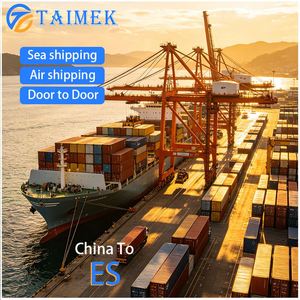
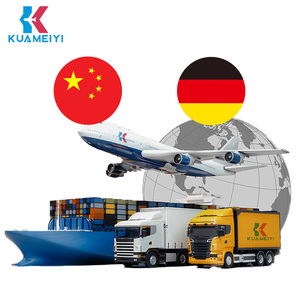
Directly integrated door-to-door freight forwarding, bonded warehousing, and multi-lane customs brokerage services originating from key Chinese manufacturing hubs.

Bridging Chinese industrial capacity with North American and Latin American retail markets requires absolute legal compliance, scale-backed ocean rates, and automated warehousing.
As a Federal Maritime Commission (FMC) licensed Non-Vessel Operating Common Carrier, we hold direct, high-volume tier-1 ocean carrier contracts (COSCO, MAERSK, CMA CGM). This guarantees dedicated space allocations and sub-market container rates on Trans-Pacific and Asia-Europe corridors.
Leverage our Foreign Trade Zone (FTZ) facilities in Miami to defer, reduce, or eliminate U.S. import tariffs. Hold wholesale inventory outside customs territory while serving North American e-commerce platforms or re-exporting directly to Latin America duty-free.
Our in-house licensed customs brokers manage mandatory ISF 10+2 filings, HTS code verification, Section 301 tariff mitigation, and FDA/USDA partner agency clearances to completely eliminate costly port demurrage and holdbacks.
Executive Summary: Global wholesale buyers are rapidly transitioning from traditional FOB (Free On Board) factory-gate sourcing to fully managed DDP (Delivered Duty Paid) supply chains powered by localized multi-hub fulfillment centers in North and South America.
For decades, cross-border procurement operated on legacy commercial terms. Buyers contracted directly with manufacturers in Guangdong, Zhejiang, or Jiangsu under FOB terms, assuming complete risk the moment cargo passed the ship's rail at ports like Shenzhen, Ningbo, or Shanghai. However, modern e-commerce demand cycles, inventory turnover pressures, and complex geopolitics have rendered traditional FOB obsolete.
Leading enterprise importers now demand **Integrated Factory Fulfillment (IFF)**. Under this modern operational standard, Chinese manufacturing ecosystems integrate directly with multi-modal logistics providers. Factories no longer just manufacture goods; they perform origin-side pick-and-pack, specialized barcode tagging, palletization, and pre-customs clearing before the goods ever board a vessel.
Looking ahead toward 2030, successful procurement directors are executing strategies centered on three major operational vectors:
Calculating the true **Landed Cost per Unit (LCPU)** is the cornerstone of effective procurement. Traditional shipping often masks hidden expenditures, including terminal handling charges (THC), port congestion surcharges, customs exam fees, and unexpected demurrage. The table below illustrates the cost-predictability benefits of integrated DDP logistics versus unbundled freight models:
| Logistics Metric | Legacy FOB + Freight Forwarder | Integrated DDP + NVOCC Fulfillment |
|---|---|---|
| Customs Risk & Compliance | Transferred entirely to importer at origin port. | Managed completely by exporter/NVOCC broker. |
| Cost Predictability | High variance (demurrage, detention, fluctuating fees). | 100% Fixed Landed Cost guaranteed upfront. |
| Supply Chain Visibility | Fragmented tracking across carriers and brokers. | Single-window end-to-end milestone tracking. |
| Working Capital Utilization | Capital locked in upfront duties & transit risk. | Capital preserved via FTZ deferred duty options. |
China’s export infrastructure is undergoing an unprecedented modernization. Factory clusters across Yiwu, Shenzhen, Guangzhou, and Ningbo have moved past low-cost assembly, evolving into high-tech, highly responsive wholesale nodes capable of customized short-run production and rapid international export dispatch.
Expert guidance on navigating international logistics, customs regulations, and order fulfillment from China to worldwide destinations.