English
 Español English Español

Explore customized DDP logistics, air/sea freight forwarding, and international customs management designed for high-volume cross-border procurement.
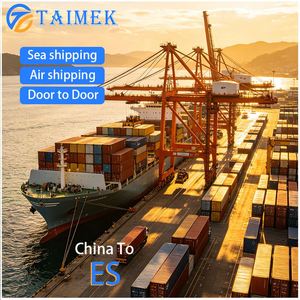

In an era defined by volatile tariff regimes, shifting trade agreements (such as USMCA and Section 301 duties), and stringent Partner Government Agency (PGA) regulations, global B2B procurement leaders can no longer view customs brokerage as an afterthought. Custom OEM Customs Brokerage represents a specialized operational paradigm where customs clearance, Harmonized Tariff Schedule (HTS) classification, and bonded logistics are custom-tailored directly to an Original Equipment Manufacturer's (OEM) unique Bill of Materials (BOM) and global supply chain footprint.
Traditional freight forwarding often treats customs entry as a standardized transactional filing. Conversely, specialized OEM customs brokerage integrates deeply with manufacturing schedules, raw material sourcing workflows, and cross-border distribution models. By auditing tariff classifications at the component level, establishing automated Importer Security Filing (ISF 10+2) pipelines, and leveraging Foreign Trade Zone (FTZ) facilities, enterprise buyers eliminate port demurrage, minimize duty exposure, and achieve complete regulatory compliance across global trade lanes.
Whether sourcing industrial machinery from China to the United States, managing nearshoring assembly routes across Mexico and North America, or distributing finished goods into the European Union via the Port of Barcelona, enterprise procurement teams require four structural pillars:
As a licensed Non-Vessel Operating Common Carrier, we leverage high-volume carrier contracts to secure guaranteed vessel space and competitive FCL/LCL ocean freight rates.
Full risk mitigation against customs holds, post-entry audits, and liquidated damages through rigorous pre-clearance documentation verification.
Complete end-to-end management from Asian factory pickup to port drayage, cross-docking, and final delivery to North American & European fulfillment hubs.
Evaluating the operational and financial impact of switching from generic freight forwarders to a specialized OEM customs brokerage management system:
| Evaluation Metric | Standard Freight Forwarder | Tailored OEM Customs Brokerage Partner |
|---|---|---|
| Customs Scope | Generic filing using vendor-supplied commercial invoices | Custom HTS mapping, component BOM pre-audits & tariff optimization |
| ISF 10+2 & Compliance | Manual filing; buyer assumes delay risk & non-compliance fines | Automated origin filing 24h+ prior to loading with penalty mitigation guarantees |
| Bonded Facilities & FTZ | Limited or outsourced to third-party public warehouses | Direct integration with Foreign Trade Zone (FTZ) & Miami gateway facilities |
| Duty Management | Immediate full duty payment required upon customs release | Duty deferral, duty drawback, and inverted tariff relief strategies |
| Dangerous Goods (DG) Handling | Often rejected or flagged with high surge surcharges | Specialized hazardous cargo compliance, MSDS verification & HazMat air/sea routing |
| Accountability | Fragmented brokers, forwarders, and drayage truckers | Single accountable partner issuing House Bill of Lading (HBL) under NVOCC license |
As global supply networks adapt to economic re-alignment and digital transformation, several macroeconomic trends are redefining how manufacturers select customs brokerage partners:
The acceleration of nearshoring has transformed Mexico into a strategic manufacturing epicentre for North American markets. Goods originating in Asia are increasingly shipped via ocean freight to Mexican ports (such as Manzanillo or Veracruz), processed or assembled under IMMEX regimes, and subsequently moved across the U.S. border. Modern OEM brokerage requires dual expertise in both Asian export customs and complex cross-border USMCA Rules of Origin documentation.
Customs agencies worldwide (including U.S. Customs and Border Protection) are employing machine learning algorithms to detect misclassified imports and valuation discrepancies. Leading OEM customs brokers utilize artificial intelligence to parse multi-thousand-line BOMs, automatically matching product specifications against historical ruling databases to eliminate misclassification risks before cargo departs origin ports.
With the implementation of the European Union's Carbon Border Adjustment Mechanism (CBAM) and expanding U.S. environmental regulations, future customs entry filings will require embedded carbon footprint tracking. OEM brokers are expanding their data capabilities to report greenhouse gas emissions alongside standard tariff entry summary forms (CBP Form 7501).
Detailed technical answers to common queries regarding cross-border customs brokerage, DDP shipping, and global freight compliance.
Combining decades of international freight experience with licensed compliance oversight, our global platform bridges Asian manufacturing hubs with North American, Latin American, and European commercial markets.
Consult with our licensed customs brokerage and freight specialists to structure a seamless, duty-efficient DDP or ocean/air shipping program tailored to your manufacturing requirements.