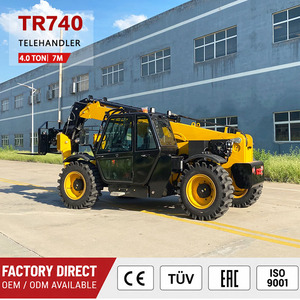
4x4 Telescopic Forklift Compact Telehandler Forklift for Container Yard Cargo Transfer and Box Loading at Depots
4WD All-Terrain
Telescopic Reach
Heavy Load Depot
 English
 Español

In modern industrial logistics, selecting high-efficiency cargo handling equipment is directly correlated with throughput optimization, reduction of operational downtime, and strict safety compliance across container yards, warehouses, and freight hubs. This authoritative guide reviews the leading cargo handling machinery solutions, technical specifications, and key OEM manufacturing criteria for global enterprise buyers.
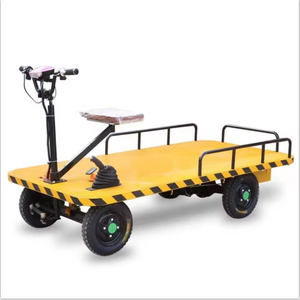
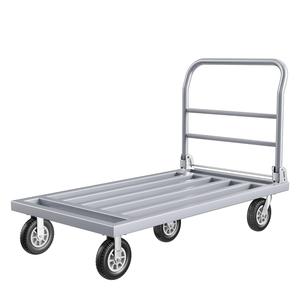
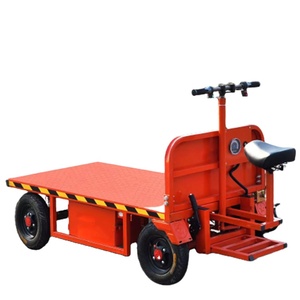
When enterprise procurement teams evaluate global suppliers of cargo handling equipment—ranging from compact electric platform trolleys to heavy-duty 4x4 container yard telehandlers—strict technical criteria must be fulfilled to safeguard investment ROI and operational compliance.
Industrial machinery must utilize high-tensile Q345/Q460 structural steel chassis and reinforced square tubing. Equipment subjected to daily container yard loading demands certified stress analysis to prevent frame fatigue under dynamic payload shifts.
The global shift toward zero-emission indoor and yard logistics elevates the importance of Lithium Iron Phosphate (LiFePO4) battery chemistry over traditional lead-acid systems, delivering higher energy density and rapid opportunity charging.
Leading manufacturers must maintain strict international quality and safety certifications. Operating equipment across North America, Latin America, and Europe requires compliance with international safety protocols.
Comparing equipment specs assists fleet managers in matching specific material movement workflows with optimal machinery choices.
| Equipment Category | Typical Payload Range | Power Source | Primary Application Scenario | Key Technical Feature |
|---|---|---|---|---|
| 4x4 Telescopic Telehandler | 2,500 kg – 5,000 kg | Diesel / High-Voltage Electric | Container yards, port depots, outdoor freight stacking | Multi-stage telescopic boom, 4WD off-road steering modes |
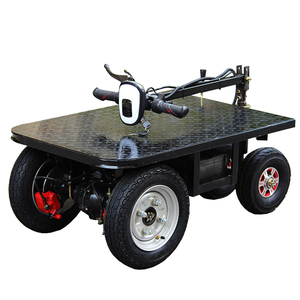
| Electric Flatbed Transporter | 800 kg – 2,000 kg | LiFePO4 / Sealed Lead-Acid | Cross-dock warehouse, order picking, indoor parcel hubs | Zero-turn radius options, non-marking polyurethane tires |
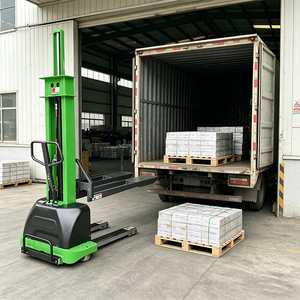
| Self-Loading Portable Stacker | 500 kg – 1,000 kg | 12V/24V Electro-Hydraulic | Van delivery, pickup truck loading, decentralized logistics | Patented self-climbing frame eliminating tail-gate lifts |
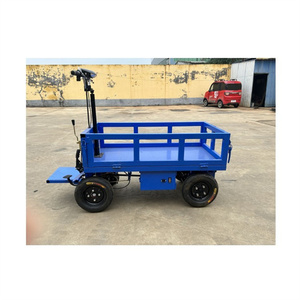
| Heavy-Duty Platform Carts | 300 kg – 1,000 kg | Manual / Assisted Electric | Factory assembly lines, internal tool transfer | Square tube robot-welded frame, dual directional lock casters |
The material handling equipment (MHE) industry is undergoing rapid digital and mechanical modernization driven by automation, telematics, decarbonization, and supply chain resilience demands.
Modern electric platform trucks and telehandlers are increasingly fitted with integrated telematics units. Sensors monitor battery state-of-health (SoH), motor temperature, hydraulic pressure, and impact detection in real time. Predictive maintenance algorithms automatically alert fleet managers before component failures occur, drastically reducing unscheduled downtime.
Standard manual and electric platform trolleys are evolving toward Automated Guided Vehicle (AGV) readiness. Drive-by-wire steering systems and standardized CAN-bus communication modules allow manufacturers to offer optional LiDAR and camera kits, enabling buyers to transition manual fleets to autonomous guided transport as facility needs expand.
B2B enterprise buyers are shifting from simple initial-purchase price comparisons to holistic Total Cost of Ownership (TCO) and integrated logistics framework evaluations.
Procurement departments now calculate energy consumption per payload-ton, battery lifecycle replacement cycles, and local spare parts availability. Purchasing electric trolleys over manual carts yields ROI within 12–18 months by accelerating order-fulfillment speed by up to 35%.
Global disruption has shifted sourcing focus toward manufacturers with multi-regional logistics corridors. Securing equipment suppliers linked with robust distribution networks—spanning China manufacturing bases, US Foreign Trade Zones, and Latin American transit routes—ensures reliable parts supply.
Standard off-the-shelf platform sizes often fail to maximize truck-loading density. Buyers demand OEM suppliers capable of adjusting platform dimensions, implementing quick-fold handlebars, or retrofitting specialized hydraulic clamps for unique cargo profiles.
Procuring high-performance cargo handling equipment is only half the equation—delivering heavy machinery seamlessly from international production facilities to local job sites requires absolute supply chain oversight. Leveraging licensed NVOCC ocean freight forwarding, custom brokerage, and Foreign Trade Zone (FTZ) warehousing capabilities creates a frictionless purchasing channel for global buyers.
Direct ocean carrier volume contracts ensure reliable container allocation (FCL/LCL) for heavy telehandlers and platform trolley shipments connecting China, the US, Mexico, and Latin America.
Defer, reduce, or eliminate import duties while storing equipment in secure FTZ facilities prior to U.S. domestic deployment or regional re-exportation across LATAM markets.
Hassle-free Importer Security Filing (ISF 10+2), tariff classification, customs bond management, and final-mile flatbed delivery directly to your depot or distribution facility.
Answers to common engineering, compliance, and international freight questions encountered by equipment purchasers.
Contact our engineering and global logistics specialists today for customized equipment quotes, OEM/ODM specification guidance, and integrated international shipping plans.
Get a Quote