 English
 Español English Español

Vetted end-to-end container logistics, DDP freight forwarding solutions, customs brokerage frameworks, and specialized regional transport services tailored for global buyers.
Full DDP solution connecting major Chinese ports to Mexican trade hubs. Includes customs clearance, duty payment, and last-mile trucking.

High-speed FCL & LCL container services to US West/East Coast ports featuring integrated telemetry tracking and automated ISF 10+2 filings.
Certified hazmat logistics for Class 9 lithium batteries and regulated chemical compounds with rapid air freight routing and compliant documentation.

Multi-modal supply chain consolidation allowing global buyers to pool container loads from multiple regional suppliers into a single seamless delivery.
Comprehensive transpacific logistics featuring bonded warehousing, foreign trade zone duty deferral, cross-docking, and North American distribution.
Dedicated EU maritime corridor offering port-to-door FCL container transport, EU customs tariff handling, and container label re-marking support.
Tailored administrative and commercial brokerage support ensuring seamless international trade compliance, vendor verification, and bill of lading documentation.
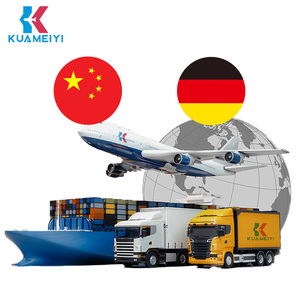
Eurasian multimodal land-bridge and sea freight network delivering rapid railway transit and ocean shipping to Germany with full European Union DDP handling.
In modern global trade, managing separate freight forwarders, customs brokers, and warehouse facilities introduces friction, vulnerability to demurrages, and compounded costs. Operating under Lilly Associates International (ShipLilly), our enterprise model provides global buyers with a single accountable partner managing cargo from origin factory pickup to destination delivery.
Because we pool cargo volume directly across primary vessel operators (Maersk, MSC, COSCO, CMA CGM), enterprise shippers secure stable space allocations and discounted volume contracts even during peak seasons.
Strategically positioned at the gateway of the Americas, our Miami warehouse and FTZ operations allow importers to defer, reduce, or eliminate U.S. customs duties on inventory stored or re-exported to Latin America.
In-house licensed customs brokers manage HTS classifications, ISF 10+2 pre-filings, PGA (FDA, USDA, EPA) clearances, and continuous customs bonds to ensure hold-free transit through North American and European ports.
We specialize in high-density container traffic connecting China, the United States, Mexico, Panama, Venezuela, and the European Union. Our dedicated bilingual desk provides transparent updates, carrier-neutral route selection, and structured door-to-door (DDP/DAP) risk mitigation.
An operational overview of technological innovations, regulatory compliance mandates, and structural shifts driving global shipping ecosystems through 2030.
The traditional ocean shipping container has evolved from a passive metal box into an active, data-emitting node within digital supply chain networks. Industrial container suppliers and fleet managers are aggressively deploying IoT (Internet of Things) sensor arrays across dry and refrigerated (reefer) intermodal units.
Modern telematics devices capture multi-variable telemetry—including GPS spatial coordinates, internal thermal fluctuations, humidity thresholds, door-opening events, and structural shock impacts. For high-value cargo (such as consumer electronics, hazardous chemicals, and pharmaceuticals), real-time visibility allows logistics teams to intervene proactively if temp deviations or customs holds occur at transshipment points, drastically reducing insurance claim ratios and cargo spoilage.
The International Maritime Organization (IMO) has instituted strict greenhouse gas (GHG) reduction targets, requiring international shipping to achieve net-zero emissions near 2050. The enforcement of mandatory carbon intensity frameworks—specifically the Energy Efficiency Existing Ship Index (EEXI) and the operational Carbon Intensity Indicator (CII)—is forcing ocean carriers to adapt fleet management strategies.
Concurrently, leading carrier lines are transitioning fleet orders toward dual-fuel container vessels powered by green methanol, liquefied natural gas (LNG), and ammonia. Enterprise buyers must now account for green freight surcharges and report Scope 3 transport emissions as carbon regulatory reporting (such as the EU's Corporate Sustainability Due Diligence Directive) becomes mandatory.
Geopolitical volatility, tariff adjustments (e.g., Section 301 tariffs), and pandemic-induced disruptions have accelerated the shift from single-origin manufacturing to "Asia Plus One" and nearshoring strategies. Industrial buyers are expanding supplier networks into Southeast Asia (Vietnam, Malaysia, Indonesia) and Latin America (specifically Mexico).
This structural realignment has transformed cross-border logistics infrastructure. The U.S.–Mexico trade corridor, for instance, requires specialized logistics providers proficient in dual-brokerage models—handling Mexican customs clearance (SAT/Pedimento verification), cross-border drayage at inland ports (Laredo, Otay Mesa), and final-mile U.S. intermodal transportation under bonded movement.
Selecting the correct container load strategy is critical to balancing volumetric cost efficiency, cargo handling security, and destination transit speeds.
| Evaluation Metric | Full Container Load (FCL) | Less than Container Load (LCL) | Door-to-Door DDP Express |
|---|---|---|---|
| Target Cargo Volume | > 13 - 15 CBM (utilizing 20' / 40' / 40'HC) | 1 CBM to 13 CBM (shared container space) | High-Value / Time-Sensitive (< 3 CBM) |
| Pricing Structure | Flat rate per container unit | Per Cubic Meter (CBM) or W/M rating | Per Kilogram (Volumetric / Actual weight) |
| Risk & Handling | Minimal touch; sealed at factory origin | Multi-touch; consolidated at origin & destination CFS | Direct point-to-point courier distribution |
| Transit Time Velocity | Fastest ocean option (direct port-to-port loop) | +3 to 7 days added for CFS consolidation/deconsolidation | Fastest overall (3-7 days total transit) |
| Customs Hold Exposure | Isolated to individual importer entry | Single container hold impacts all consolidated co-loaders | Individual air entry clearance processing |
How chief procurement officers and logistics executives can build resilient, cost-optimized, and compliant freight sourcing architectures.
Extreme ocean freight rate volatility over recent years demonstrated the vulnerability of relying solely on annual long-term fixed contracts or 100% spot market exposure. Enterprise procurement leaders are adopting hybrid freight contracting models.
Under this strategy, companies commit 50%–60% of baseline volume to fixed annual NVOCC service contracts to guarantee space during peak shipping cycles. The remaining 40%–50% is allocated dynamically across index-linked contracts (tied to spot benchmarks such as the Shanghai Containerized Freight Index) and short-term spot tenders. This structure allows buyers to capture rate drops during market downturns while protecting core volume during capacity squeezes.
As interest rates remain elevated, holding inventory incurs substantial cost of capital. Forward-thinking buyers are redesigning their distribution topology around Foreign Trade Zones (FTZs) and bonded warehousing hubs, such as ShipLilly’s Miami FTZ infrastructure.
Global customs authorities—including U.S. Customs and Border Protection (CBP) via the Automated Commercial Environment (ACE), and the EU’s Import Control System 2 (ICS2)—are enforcing mandatory digital pre-filings prior to vessel departure.
Failure to execute accurate Importer Security Filings (ISF 10+2) at least 24 hours prior to loading at foreign ports results in immediate $5,000 penalties per violation, severe customs holds, and daily container demurrage fees exceeding $350/TEU. Enterprise procurement must partner exclusively with logistics providers maintaining direct EDI integrations with CBP to automate risk-screening and guarantee compliance before cargo hits the water.
Expert answers to critical operational, regulatory, and financial questions regarding container shipping and freight brokerage.
A Non-Vessel Operating Common Carrier (NVOCC) is an FMC-licensed ocean transportation intermediary that issues its own House Bill of Lading (HBL) and assumes carrier liability for ocean transport. Unlike basic freight forwarders who simply act as booking agents, an NVOCC holds direct, high-volume service contracts with ocean vessel operators. This status enables NVOCCs like ShipLilly to offer lower contracted freight rates, guaranteed container allocations, and unified door-to-door accountability.
Standard U.S. import clearance requires: 1) Commercial Invoice stating detailed product valuation and currency; 2) Itemized Packing List; 3) Master/House Bill of Lading; 4) Correct Harmonized Tariff Schedule (HTS) 10-digit codes; 5) Customs Bond (Single Entry or Continuous Bond); and 6) Importer Security Filing (ISF 10+2) submitted 24+ hours before origin loading. Additional Partner Government Agency (PGA) permits—such as FDA, USDA, or EPA certifications—are required for regulated commodities.
Under DDP terms, the seller/logistics provider assumes total operational and financial responsibility for the shipment until it arrives safely at the buyer’s specified warehouse destination. This includes ocean/air freight costs, export clearance, marine insurance, destination port handling fees, customs brokerage, import duty/tariff payments, and final-mile trucking delivery. DDP eliminates surprise demurrage fees and administrative burdens for the buyer.
Demurrage (charges for containers sitting inside the port terminal past free days) and detention (charges for holding empty containers past free time) can be mitigated by: 1) Pre-clearing customs via automated EDI prior to vessel arrival; 2) Contracting extended free time (e.g., negotiating 10-14 free days with carriers via NVOCC contracts); 3) Pre-arranging port drayage chassis availability; and 4) Utilizing transloading facilities near the port to return containers rapidly.
Shipping Dangerous Goods (such as Class 9 Lithium Batteries or industrial chemicals) requires strict adherence to the International Maritime Dangerous Goods (IMDG) Code for ocean freight and IATA regulations for air freight. Importers must provide a valid Safety Data Sheet (SDS), certified UN-rated hazard packaging, accurate DG Declarations, and proper container hazard placards. Non-compliance results in immediate cargo rejection and heavy civil fines.
A Foreign Trade Zone is considered legally outside U.S. customs territory. When containerized goods enter an FTZ (such as ShipLilly’s Miami FTZ facility), customs duty payment is deferred. If those goods are subsequently repackaged, consolidated, or redistributed and exported directly to foreign markets (e.g., Latin America or the Caribbean), U.S. import duties and tariffs are completely waived (0% duty incurred).
Partner with an FMC-licensed NVOCC, customs broker, and FTZ operator. Request a customized rate analysis, trade lane consultation, or door-to-door freight quotation from our logistics specialists.