 English
 Español English Español

Enterprise-grade ocean shipping arrangements, custom brokerage protocols, and intermodal transport connecting major China manufacturing hubs to North America, Europe, and Latin America.

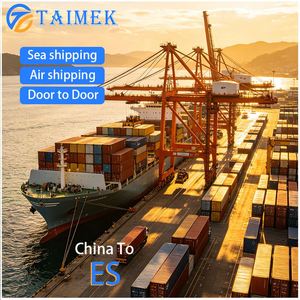
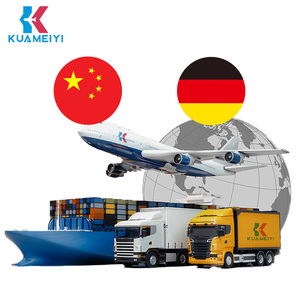
In global trade, navigating the gap between OEM/ODM manufacturing in China and complex customs enforcement in North America or Europe requires direct carrier contracting, regulatory authority, and active infrastructure.
Unlike unregistered booking brokers, an FMC-licensed Non-Vessel Operating Common Carrier issues its own legally binding House Bill of Lading (HBL). We negotiate direct service contracts with major ocean carriers (COSCO, MAERSK, CMA CGM, ONE, MSC), granting enterprise buyers preferential allocation during peak season space crunches.
Capitalizing on our primary strategic hub in Miami, FL, we integrate Foreign Trade Zone (FTZ #281) warehousing. Buyers can store imported China goods, defer U.S. customs duties indefinitely until commercial entry, or eliminate tariffs entirely on re-exported cargo destined for Mexico, Central, and South America.
Customs holds and demurrage fines severely degrade supply chain margins. Our licensed customs brokers manage Importer Security Filings (ISF 10+2), Section 301 tariff mitigation, HTS tariff code audit, anti-dumping review, and Partner Government Agency (FDA, USDA, EPA, FCC) clearance in advance of port arrival.
As global supply chains shift toward heightened resilience, agility, and regulatory compliance, ocean procurement strategies for China-manufactured goods are undergoing structural transformations. Sourcing executives must adapt to several critical macro-trends:
The convergence of artificial intelligence, IoT sensors, and decentralized ledgers is modernizing traditional ocean freight manufacturing and shipping logistics.
Machine learning models analyze historical port congestion, weather patterns, and terminal dwell times to dynamic forecast vessel arrivals within a 4-hour window, automatically pre-clearing drayage chassis to eliminate costly port demurrage and detention fees.
Transitioning from paper-based title documents to DCSA-compliant electronic Bills of Lading accelerates cargo release from 5-7 days down to mere minutes, eliminating courier costs and preventing fraudulent endorsement claims in high-value B2B transactions.
Smart containers equipped with cellular and satellite IoT sensors monitor internal temperature, humidity, door-open events, and shock vectors in real-time, providing actionable quality assurance data for sensitive electronics, machinery, and pharmaceuticals.
Evaluate ocean freight options based on volume thresholds, transit lead times, financial risk exposure, and administrative overhead.
| Shipping Mode / Incoterm | Optimal Cargo Volume | Average Transit Lead Time | Customs & Duty Burden | Financial Risk & Demurrage Exposure |
|---|---|---|---|---|
| FCL (Full Container Load) - DDP | > 15 CBM (20' / 40' HQ Container) | 14 - 22 Days (China to US West/East) | Managed 100% by NVOCC Forwarder | Minimal Risk: All landed taxes, customs clearances, and drayage fees are pre-calculated into a fixed rate. |
| LCL (Less Container Load) - DDP | 1 CBM to 14 CBM (Consolidated) | 18 - 26 Days (Includes CFS Deconsolidation) | Managed 100% by NVOCC Forwarder | Low Risk: Shared container costs with predictable per-CBM pricing; minor delay potential at origin CFS. |
| FCL - FOB (Free On Board) | > 15 CBM | 14 - 20 Days (Port to Port) | Managed entirely by Buyer / Importer | High Risk: Importer assumes liability once cargo passes ship's rail; subject to port demurrage & detention. |
| Multimodal Sea-Air / Sea-Rail | Urgent Medium-Volume Cargo | 7 - 12 Days (Hybrid Routing) | Custom Transit Clearance Required | Moderate Risk: Higher freight cost per kg; relies on tight connection windows at transshipment hubs. |
Expert answers to critical legal, operational, and regulatory questions encountered by supply chain managers importing from China.
A Non-Vessel Operating Common Carrier (NVOCC) is licensed and bonded by the Federal Maritime Commission (FMC) in the United States or equivalent international maritime agencies. An NVOCC acts as a legal ocean carrier, issuing its own House Bill of Lading, establishing published tariff rates, and maintaining direct volume service contracts with vessel-operating lines (VOCCs). A basic freight forwarder acts strictly as an agent without issuing bills of lading or assuming direct carrier liability, often forcing buyers to pay higher broker markups.
Under FOB terms, the buyer takes financial responsibility the moment cargo is loaded onto the vessel in China, leaving them vulnerable to unexpected origin surcharges, fluctuating ocean spot rates, U.S. customs entry delays, terminal handling charges, and severe port demurrage fines (which can exceed $300/container/day). DDP terms transfer all door-to-door transit risk, customs brokerage, Section 301 tariff management, and final mile delivery onto the logistics partner, establishing a guaranteed landed cost per unit.
Goods admitted into a U.S. Foreign Trade Zone (such as FTZ #281 in Miami) are legally considered outside U.S. Customs territory. Importers holding inventory in an FTZ defer customs duties and excise taxes until the products physically enter the domestic market for sale. If cargo is re-exported to international destinations (e.g., Latin America or Europe), duties are eliminated 100%. Additionally, FTZs allow weekly entry procedures, consolidating hundreds of individual shipments into a single weekly customs entry fee to dramatically cut administrative filing costs.
Standard commercial imports require a Commercial Invoice, Detailed Packing List, Master or House Bill of Lading (B/L), verified HTS (Harmonized Tariff Schedule) codes, and a valid Customs Bond (Single Entry or Continuous). For ocean cargo bound for the United States, an Importer Security Filing (ISF 10+2) MUST be transmitted to U.S. Customs and Border Protection at least 24 hours prior to vessel loading at the China origin port to avoid automated $5,000 statutory penalties.
Peak season congestion can be managed by: (1) Partnering with NVOCCs that maintain off-dock container yard (CY) access and private chassis pools; (2) Transmitting ISF filings and entry paperwork 5 days prior to vessel arrival for pre-clearance; (3) Negotiating extended free-time (e.g., 10 to 14 days of combined demurrage/detention) directly into carrier contracts; and (4) Utilizing pre-scheduled night-gate drayage services to pull containers immediately upon offloading.
Yes. Hazardous materials (including Class 9 lithium-ion batteries, chemicals, and flammable liquids) can be legally transported via ocean freight provided they comply with IMDG (International Maritime Dangerous Goods) regulations. Shipments require UN-approved packaging, compliant MSDS (Material Safety Data Sheets), certified DG declarations, and specialized vessel stowing. Experienced NVOCC agents handle full hazmat declarations and destination customs clearance for compliant DG imports.
Direct weekly sailings connecting major manufacturing zones in East and South China to strategic gateway ports across North America, Europe, and Latin America.
East China origin gateway serving Yangtze River Delta industrial zones. Direct fast-boat service to Los Angeles, Long Beach, and Miami.
Pearl River Delta electronics manufacturing origin. Premium express FCL/LCL ocean loops to US Gulf, US East Coast, and EU ports.
North China industrial and heavy machinery export hub. Specialized breakbulk, flat-rack, and containerized sea freight to global destinations.
Primary U.S. FTZ distribution hub for seamless re-export and transshipment to Mexico, Panama, Venezuela, and South America.
Request an institutional quote, compare ocean carrier contract rates, or consult with our FMC-licensed NVOCC logistics team to engineer a custom DDP door-to-door solution.
Get Catalog