 English
 Español English Español

Explore our specialized door-to-door, DDP, ocean, and air brokerage services tailored for seamless cross-border compliance and rapid clearance across key global trade corridors.


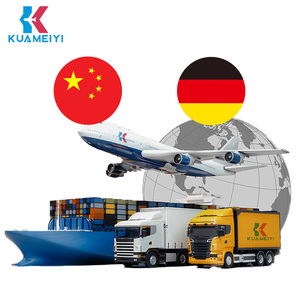
Combining licensed NVOCC ocean vessel contracts with strategic Foreign Trade Zone (FTZ) hubs and deep regulatory mastery across North America, Latin America, and Asia.
As a fully licensed Non-Vessel Operating Common Carrier, we issue direct House Bills of Lading and aggregate container volume across major ocean alliances (20' & 40' FCL, LCL), guaranteeing stable vessel space and contract-tier freight rates even during peak shipping crunches.
Positioned at the commercial crossroads of the Americas, our Miami Foreign Trade Zone (FTZ) bonded facilities empower global importers to defer, reduce, or completely eliminate customs tariffs on goods earmarked for re-export to Latin America, Mexico, and the Caribbean.
Eliminate costly port delays and exams. Our in-house licensed customs brokers meticulously audit Harmonized Tariff Schedule (HTS) classifications, pre-file ISF 10+2 documentation, and navigate FDA, USDA, CTPAT, and EPA partner agency compliance prior to port touch-downs.
An authoritative analysis on supply chain realignments, regulatory shifts, and technical mechanisms designed to build resilient international cargo logistics.
The global trade architecture is undergoing a massive transformation driven by nearshoring dynamics and tariff realignments. Importers moving industrial equipment, consumer goods, and high-tech components from China to North America are increasingly pivoting toward consolidated Delivered Duty Paid (DDP) logistics models. Under standard Incoterms, foreign exporters often struggle to maintain visibility once cargo arrives at destination entry points. DDP solutions eliminate this friction by shifting total legal, customs, and transportation responsibility to an integrated freight forwarding partner.
By leveraging established trade lanes connecting Asia with key gateways like Miami, Port of Los Angeles, and cross-border trade hubs in Mexico (such as Manzanillo and Laredo), enterprise buyers bypass bureaucratic hurdles. A unified DDP framework covers foreign export declarations, international maritime/air carriage, destination import entries, duty and tax advancement, and final mile store-door delivery under a single transparent invoice.
Strategic Value Insight: Integrating automated customs clearance at origin and destination reduces total landed transit times by an average of 4.5 days while removing demurrage risk caused by missing import paperwork.
With global trade policies fluctuating, maximizing cash flow efficiency requires sophisticated duty-mitigation techniques. Strategic entry into a U.S. Foreign Trade Zone (FTZ) allows importers to legally treat facilities in places like Miami as operating outside U.S. Customs territory. This provides four core financial levers for global procurement directors:
Duty Deferral: Import duties and federal excise taxes are deferred until goods physically exit the FTZ and enter domestic commerce. Capital that would otherwise be locked up in upfront tax payments remains available for operational expansion.
Duty Elimination on Re-Exports: Cargo consolidated from Asian manufacturers and stored in a Miami FTZ can be split, repacked, and shipped to buyers in Latin America, Mexico, or Europe without ever incurring U.S. import customs duties.
Inverted Tariff Advantages: When imported sub-components carry a higher tariff rate than the finished assembled product, manufacturers within an FTZ can elect to pay the lower duty rate applicable to the final finished product upon domestic entry.
Weekly Entry Savings: Instead of paying individual Customs entry processing fees (MPF) on every container, FTZ operators file a single consolidated Weekly Entry, capping customs entry costs dramatically for high-volume supply chains.
Modern compliance is no longer just about filling out a bill of lading; it requires precision engineering against regulatory penalties. Non-compliance with U.S. Customs and Border Protection (CBP) rules can lead to severe penalties, hold fees, and container seizures. Key compliance pillars include:
Importer Security Filing (ISF 10+2): For ocean imports into North America, the ISF must be transmitted to customs authorities at least 24 hours before the container is laden aboard the vessel at the foreign port. Failure to submit complete data elements—such as manufacturer identity, buyer/seller information, and container stuffing location—triggers mandatory $5,000 liquidated damages penalties per violation.
Partner Government Agency (PGA) Alignment: Modern shipments frequently fall under multi-agency jurisdiction. A consignment of medical apparel or packaged food requires simultaneous clearance from the FDA, USDA, or EPA alongside CBP. Experienced brokerage factories conduct automated pre-clearance audits to verify registration numbers, device listings, and phytosanitary certificates before cargo departure.
Key evolution vectors transforming how enterprise importers select customs brokerage factories and logistics partners.
Static status reports are replaced by IoT-enabled milestone tracking. Importers now demand live telemetry covering vessel coordinates, port gate-in events, customs hold statuses, and final mile delivery ETAs directly integrated into their enterprise ERP systems.
Siloed operations cause miscommunication. Modern enterprises favor single-source logistics architectures where ocean forwarding, port drayage, customs clearance, bonded warehousing, and last-mile trucking are managed under one master service contract.
With European and North American carbon reporting regulations tightening (such as EU CBAM), global buyers prioritize logistics brokers offering eco-friendly intermodal rail alternatives, low-emission drayage fleets, and route optimization metrics.
Direct answers from our senior licensed customs brokers and logistics engineers regarding complex international trade operations.
A Non-Vessel Operating Common Carrier (NVOCC) is a regulatory-licensed ocean transportation intermediary that acts as a carrier by issuing its own House Bill of Lading. Unlike a standard freight agent that merely books space, an NVOCC holds direct high-volume service contracts with major ocean vessel alliances. This volume aggregation enables us to pass wholesale contract freight rates directly to importers, secure guaranteed container allocation during peak shipping seasons, and assume full legal accountability for cargo transit from origin port to destination terminal.
DDP shipping transfers total operational and financial responsibility to the logistics provider. Under DDP terms, our enterprise team manages export customs in China, international ocean or air freight, destination customs brokerage, duty/tax disbursement, and store-door delivery. This removes the risk of surprise accessorial charges, port storage fees, or customs hold fines, allowing buyers to fix their landed product costs with complete financial predictability.
Commercial Customs clearance requires five primary document sets: (1) An accurate Commercial Invoice containing detailed product descriptions, unit values, currency, and country of origin; (2) An itemized Packing List specifying gross/net weights and carton dimensions; (3) The Master and House Bill of Lading (or Air Waybill); (4) Verified Harmonized Tariff Schedule (HTS) 10-digit classification codes; and (5) For ocean shipments, an Importer Security Filing (ISF 10+2). Depending on commodity type, additional permits such as FDA Food Facility Registrations, EPA declarations, or Certificates of Origin may be required.
A Foreign Trade Zone is a restricted-access area considered outside U.S. Customs territory. Goods originating from Asia or Europe can be imported directly into our Miami FTZ warehouse without paying U.S. import duties or taxes. Once stored, goods can be inspected, repacked, re-labeled, or consolidated. If those items are subsequently re-exported to markets in Latin America, Mexico, or the Caribbean, U.S. import duties are 100% eliminated, creating massive tax savings for regional distribution operations.
As a operational benchmark, LCL is economical for smaller volume shipments under 13 to 15 cubic meters (CBM), where cargo shares container space with other shippers. However, once total volume exceeds 15 CBM, or when shipping high-value/fragile merchandise, Full Container Load (FCL) becomes cost-effective. FCL provides a dedicated 20-foot or 40-foot container sealed directly at the origin factory, significantly shortening transit times by eliminating deconsolidation steps at destination terminals.
Consult with our licensed customs brokerage team today. Connect directly to analyze your trade lanes, review HTS classification accuracy, and receive a competitive DDP or FTZ solution tailored to your supply chain.