 English
 Español English Español

High-efficiency shipping lanes, customs brokerage, and door-to-door fulfillment architectures engineered for global B2B buyers and e-commerce enterprises.
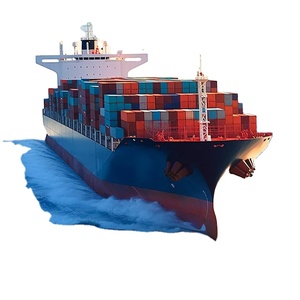
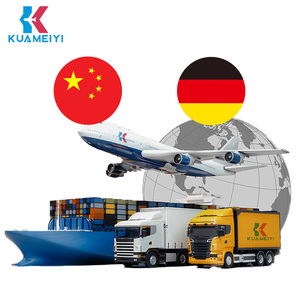
An operational handbook for global procurement officers, supply chain directors, and cross-border brand owners evaluating factory-direct logistics infrastructure.
In an era defined by macro-economic fluctuations, nearshoring re-alignments, and stringent tariff enforcement, selecting a premier Fulfillment Services Factory & Supplier is no longer merely a tactical purchasing choice—it is a core strategic lever. Modern fulfillment demands an integrated synthesis of ocean vessel space contracting, automated customs brokerage, bonded Foreign Trade Zone (FTZ) warehousing, and real-time enterprise resource telemetry.
Organizing a cross-border logistics pipeline between major manufacturing hubs—such as China, Southeast Asia, and Central Europe—and consumption destinations like North America, Mexico, and the European Union requires a deep operational understanding of both vessel-operating common carriers (VOCCs) and licensed Non-Vessel Operating Common Carriers (NVOCCs). By controlling ocean freight allocations through volume-backed master service agreements, a trusted fulfillment partner isolates shippers from spot-market volatility while ensuring regulatory compliance across all ports of entry.
Unlike standard freight brokers, a Federal Maritime Commission (FMC) licensed NVOCC acts as a legal carrier, issuing House Bills of Lading (HBL), setting tariff rates, and assuming cargo liability. This dual capacity allows high-volume fulfillment facilities to pool freight volumes from thousands of enterprise shippers, securing preferred vessel stowing, guaranteed container allocation during peak seasons, and direct EDI integration with major ocean lines like Maersk, MSC, COSCO, and CMA CGM.
Optimizing landed cost requires matching cargo profile dynamics with the appropriate transport channel. The operational decision framework spans four primary transportation modes:
Ideal for ocean shipments exceeding 15 Cubic Meters (CBM). FCL minimizes handling touchpoints by sealing 20ft, 40ft, or 40ft High Cube containers directly at the origin factory, eliminating intermediate freight consolidation delays.
Designed for mid-sized cargo batches under 15 CBM. Cargo is consolidated at designated Container Freight Stations (CFS) at origin, optimizing space utilization and allowing smaller brands to maintain lean manufacturing cycles.
Critical for high-value electronics, medical equipment, or time-sensitive product launches. Offers 3-to-5 day door-to-door transit schedules backed by airport-to-airport master air waybills (MAWB) and direct passenger-freighter space allocations.
Navigating cross-border procurement requires clear delineation of liability, freight risk, and customs responsibilities between overseas factories and domestic buyers. The matrix below outlines how primary Incoterms impact operational oversight and total landed cost structure:
| Incoterm Baseline | Origin Factory Duty | Freight Transit Risk Holder | U.S. / EU Customs Brokerage | Landed Cost Transparency |
|---|---|---|---|---|
| DDP (Delivered Duty Paid) | Door-to-door transit, export clearance, ocean/air freight booking | Factory / Appointed Logistics Partner | Managed by Logistics Agent (Included) | Highest: Single unit-cost inclusive of duties, fees & transit |
| DAP (Delivered at Place) | Origin inland transport & main carriage freight line | Buyer upon arrival at terminal | Buyer's Responsibility | Moderate: Excludes destination import taxes and customs clearance |
| FOB (Free on Board) | Inland origin transit & loading onto ocean vessel | Buyer from vessel loading forward | Buyer's Nominated Broker | Variable: Buyer controls main carriage rate negotiations |
| CIF (Cost, Insurance & Freight) | Origin delivery, vessel loading, basic maritime insurance | Transfers to Buyer once loaded on vessel | Buyer's Responsibility | Complex: Unloading terminal charges often passed to buyer |
For high-volume importers, utilizing a facility affiliated with a U.S. Foreign Trade Zone (such as FTZ #25 in Miami, Florida) unlocks structured working capital benefits. Goods admitted into an FTZ are legally considered to remain outside U.S. Customs territory. This status provides three tangible financial advantages:
Avoiding administrative holds, demurrage charges, and U.S. Customs and Border Protection (CBP) penalties requires precise documentation management. Every ocean import shipment moving from overseas factories to U.S. ports must comply with strict filing deadlines:
The Importer Security Filing (ISF 10+2) must be submitted to U.S. Customs at least 24 hours before the cargo is loaded onto the vessel at the foreign port of departure. Failure to comply results in liquidated damages of $5,000 per violation. Furthermore, accurate Harmonized Tariff Schedule (HTS) code assignment ensures correct duty payment while verifying compliance with Partner Government Agencies (PGAs) including the FDA, USDA, FCC, and EPA.
Full operational transparency, carrier-neutral rate negotiations, and proprietary digital integration built to scale enterprise supply chains.
Operate directly with a licensed Non-Vessel Operating Common Carrier holding volume contracts across major ocean alliances, guaranteeing space even during peak demand cycles.
Seamlessly sync your Shopify, Amazon, ERP, or custom software with automated inventory receiving, SKU-level tracking, and EDI shipment status updates.
Positioned at key global trade crossroads. Combine factory pick-up in Shenzhen or Ningbo with bonded distribution in Miami and cross-border trucking into Mexico.
As international supply chains evolve, procurement directors must adapt to structural industry shifts that are reshaping how products are manufactured, routed, and fulfilled:
Rising trans-Pacific shipping volatility has accelerated the adoption of dual-hub distribution models. Global brands are increasingly complementing primary production in Asia with nearshore manufacturing in Mexico and Central America. Utilizing streamlined DDP trucking and cross-border customs brokerage, businesses can route components to Mexican assembly facilities and move finished goods into the U.S. within 48 to 72 hours.
Modern e-commerce requires moving inventory closer to end consumers before purchase orders are submitted. Advanced Warehouse Management Systems (WMS) now utilize predictive analytics to automatically split stock across regional distribution hubs (East Coast, West Coast, and Central US), drastically reducing final-mile delivery costs and transit times.
Governments worldwide are enforcing stricter origin verification standards, such as the Uyghur Forced Labor Prevention Act (UFLPA) in the U.S. and digital product passports in the EU. Modern fulfillment facilities must maintain complete digital paper trails—from raw material purchase orders to bill of lading issuance—to ensure unhindered customs clearance.
Answers to common operational, regulatory, and financial questions asked by global procurement managers and cross-border shippers.
Connect directly with our senior logistics engineers to build a custom ocean freight, customs clearance, or FTZ warehousing architecture tailored to your business goals.