English
 Español English Español

Authorized factory-direct equipment, specialized breakbulk handling assets, and multi-modal transport vessels optimized for Western India’s maritime corridor.
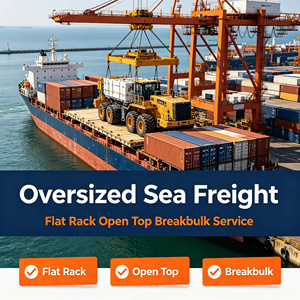
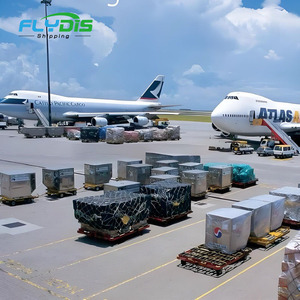
Mumbai, positioned strategically along the Arabian Sea, serves as the economic nerve center and primary maritime gateway for India's heavy manufacturing, energy infrastructure, and industrial engineering exports. Navigating breakbulk logistics—defined as non-containerized cargo transported as individual pieces due to oversized dimensions or structural weight—demands rigorous engineering execution, specialized drayage coordination, and precise terminal handling protocols.
As leading **Breakbulk Cargo Factories & Exporters in Mumbai**, our operational ecosystem integrates deep port infrastructure knowledge across both Mumbai Port Trust (MbPT) and Jawaharlal Nehru Port Trust (JNPT / Nhava Sheva) with advanced heavy-lift transport technology. Moving Over-Dimensional Cargo (ODC) and Super Heavy Lift (SHL) units from Western India's industrial hinterlands—including Chakan, Pune, Tarapur, Thane-Belapur, and Gujarat’s manufacturing belts—requires seamless alignment with maritime safety parameters, highway load constraints, and international stowage mandates.
Information Gain Insight: Unlike standard containerized shipping where payloads are governed by uniform ISO box parameters, breakbulk cargo execution requires bespoke structural calculations. Key factors include deck load-bearing capabilities ($MT/m^2$), point-loading stress distribution, dynamic center-of-gravity (CG) modeling, and compliance with the IMO Code of Safe Practice for Cargo Stowage and Securing (CSS Code).
Our factory-to-berth workflow ensures zero operational friction. By deploying specialized hydraulic multi-axle modular trailers, high-capacity shore cranes, and floating crane barges, we bridge the gap between inland fabrication yards and ocean-going heavy-lift vessels (HLVs).
The industrial ecosystem surrounding Greater Mumbai generates diverse breakbulk logistical demands. Each industrial corridor presents unique transport vector constraints, requiring custom-tailored heavy movement engineering.
Exporting massive hydro-processing reactors, fractionating columns, and heat exchangers from the Taloja MIDC and Rasayani chemical complexes via JNPT shallow-water berths and specialized heavy-lift mooring points.
Movement of 200+ Ton power transformers, steam turbine rotors, and boiler drums manufactured in Pune, Chakan, and Nashik, navigating civil transit corridors to MbPT Indira Dock for direct vessel hook loading.
Logistical consolidation of structural steel jackets, wellhead platforms, and pipeline spools manufactured at domestic yards for deployment in Bombay High offshore fields or export to GCC maritime energy projects.
Executing these specialized movements demands route survey analysis (RSA) to evaluate bridge load ratings, overhead clearance of high-voltage transmission lines, and turning radii along state highways (SH) and national expressways (NH-48, NH-66).
| Cargo Classification | Typical Dimensions / Weight | Primary Mumbai Port Terminal | Handling & Vessel Requirements |
|---|---|---|---|
| Over-Dimensional (ODC) | Length > 14m, Height > 3.8m, Weight < 50 MT | JNPT (NSICT / NSIGT / BMCT) | Flat Rack / Open Top Containers, Reach Stackers |
| Heavy Lift (HL) | Single Piece Weight 50 MT – 150 MT | MbPT (Indira Dock Berth 18-21) | Multi-Axle SPMTs, Shore Tandem Crane Lift |
| Super Heavy Lift (SHL) | Single Piece Weight > 150 MT up to 600 MT | MbPT Floating Crane / Barging Anchorage | Heavy Lift Vessel (HLV) Gear, Floating Derrick Barges |
| Dry Breakbulk Parcels | Steel Coils, Structural Beams, Raw Cables | MbPT OCT / JNPT Shallow Water Berth | Gantry Cranes, Heavy Duty Forklifts, Vacuum Lifters |
The Mumbai maritime landscape is undergoing a massive transformation, driven by strategic national infrastructure projects under the PM Gati Shakti National Master Plan and Sagarmala Initiative. These upgrades directly elevate the capability of local breakbulk exporters to service global supply chains with superior speed and lowered landed costs.
Located near Palghar (North of Mumbai), the upcoming all-weather Wadhavan Port features a natural draft of 20 meters, enabling deep-draft heavy-lift vessels and ultra-large breakbulk carriers to berth without tidal restriction.
Direct rail connectivity linking JNPT with Northern India’s manufacturing nodes allows double-stack and heavy axle-load breakbulk rail wagons (BWT/BFR) to transport machinery straight to port marshaling yards.
The Mumbai Trans Harbour Link dramatically slashes transit times for heavy haulage between South Mumbai docks and Navi Mumbai industrial hubs, reducing urban route congestion and permitting smoother night transit of ODC units.
Furthermore, digital integration via the **Port Community System (PCS 1x)** and ICEGATE has streamlined custom documentation, Form 13 gate approvals, and electronic delivery orders (eDO) for breakbulk consignments, cutting clearance lead times by over 45%.
Partnering with our Mumbai-based breakbulk export division delivers tangible operational advantages, drawing upon licensed NVOCC carrier status, direct vessel chartering networks, and specialized marine engineering teams.
Certified marine supercargoes and riggers design custom dunnage, lashing, and securing plans using high-tensile steel chains, wire ropes, and heavy-duty turnbuckles conforming to international sea-fastening rules.
We maintain access to global heavy-lift vessel owners, booking full charters or part-charter parcels under GENCON contracts to guarantee berth priority and competitive ocean freight rates from Mumbai to global ports.
Strategic access to Foreign Trade Zones (FTZ) and bonded warehousing facilities near Nhava Sheva enables duty deferral, staging of export machinery, and value-added kitting before vessel loading.
Technical guidance for global procurement managers, project freight forwarders, and industrial buyers sourcing breakbulk solutions from Mumbai.
Mumbai Port Trust (MbPT) offers deep-water harbor docks (Indira Dock) specializing in conventional breakbulk, heavy-lift project cargo, liquid bulk, and RO-RO operations with dedicated shore crane support. JNPT primarily handles containerized cargo (FCL/LCL) and container-based breakbulk (Flat Racks/Open Tops), although it also maintains shallow-water berths for specialized breakbulk vessels.
ODC movement requires permissions from the Ministry of Road Transport and Highways (MoRTH) and Maharashtra RTO. Transit clearance involves route feasibility studies, bridge strength verification, escort vehicle deployment, and adherence to nighttime transit restrictions within Greater Mumbai municipal limits.
Our marine surveying team performs mathematical sea-fastening calculations based on vessel motion criteria (rolling, pitching, heaving). A Marine Warranty Surveyor (MWS) inspects the stowage, dunnage, welding of stoppers, and tensioning of steel wire lashing before issuing an official Certificate of Approval (CoA) required by marine underwriters.
Yes. Both MbPT and JNPT offer covered warehouses and open-yard staging areas for breakbulk cargo. Free-period storage rules vary by terminal, but pre-staging cargo ensures rapid loading cycles when the ocean vessel completes berthing.
Export documentation involves filing a Shipping Bill on ICEGATE under specific schemes (e.g., Advance Authorization, Duty Drawback). Custom officers conduct physical examinations at dockside or factory premises (for factory-stuffed/sealed cargo) before generating the Let Export Order (LEO).
To provide a precise engineering quote, please provide: precise piece dimensions (L x W x H), gross/net weight per piece, center of gravity (CG) diagram, lifting point locations, delivery Incoterms (FOB, CFR, DDP), origin address, and target delivery port.
Connect with our senior project logistics directors today. We analyze your cargo technical drawings, structural dimensions, and timeline to deliver an optimized heavy-lift maritime plan.