 English
 Español English Español

Tailored freight configurations, custom brokerage arrangements, and door-to-door (DDP) logistics for Greek importers purchasing from international manufacturing hubs.



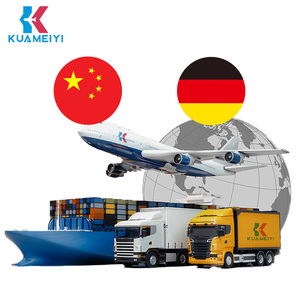
The Hellenic Republic has undergone a profound structural shift in its logistics infrastructure over the past decade. Centered around the strategic expansion of the Port of Piraeus (Container Terminal - PCT) and supported by the Port of Thessaloniki (ThPA) in Northern Greece, the country has evolved from a regional importer into the primary maritime bridge connecting Asian manufacturing hubs (Shenzhen, Ningbo, Shanghai, Qingdao) and Transatlantic routes directly with the European Union's internal market.
For global supply chain executives, industrial buyers, and procurement heads looking for bulk shipping manufacturers and factories servicing the Greece market, navigating this corridor demands a sophisticated understanding of maritime routing, tariff structures, and intermodal corridors. Greece represents the first major deep-water port of entry in the Mediterranean after vessels transit the Suez Canal. By offloading bulk industrial components, raw materials, heavy machinery, and finished consumer goods at Piraeus or Thessaloniki rather than routing around Western Europe to North Sea ports (Hamburg, Rotterdam, Antwerp), importers shave between 7 to 10 days of ocean transit time.
Furthermore, bulk shipping operations into Greece require specialized factory-to-port coordination. Whether handling dry bulk (clinker, minerals, agricultural commodities), liquid bulk, or heavy project cargo (wind turbine components, industrial transformers, steel coils), working with a licensed NVOCC (Non-Vessel Operating Common Carrier) ensures reserved vessel capacity, locked-in contract rates, and robust risk management against Mediterranean port demurrage.
Dedicated 20ft, 40ft High Cube, and Open Top equipment allocations under contract rates directly from Asian and American manufacturing clusters to Piraeus.
Full-spectrum logistics managing factory pick-up, origin export clearance, ocean freight, Greek ICIS+ customs declaration, and final mile trucking.
Cost-effective Less-than-Container Load services combining multi-factory orders into unified containers at origin CFS facilities for Greek buyers.
To successfully execute bulk shipping operations into Greece, factory suppliers and international logistics coordinators must tailor their supply chain routing to specific Greek industrial clusters. Greece features three dominant economic and industrial delivery zones, each with distinct infrastructural demands:
The greater Attica region houses over 50% of Greece’s warehousing, distribution, and manufacturing assembly plants. Bulk shipments entering Piraeus (PCT) are rapidly moved via heavy-haul drayage trucks or dedicated rail lines directly into the industrial parks of Aspropyrgos and Elefsina.
The Port of Thessaloniki (ThPA) serves as the primary maritime gateway for Northern Greece and the greater Balkan hinterland (North Macedonia, Bulgaria, Serbia, Romania). Bulk raw materials and industrial machinery imported from overseas factories are routed through Thessaloniki to fuel regional manufacturing.
Comparative analysis of freight modes from Asian manufacturing hubs to Greek entry ports based on cost, transit time, regulatory friction, and cargo volume.
| Shipping Modality | Ideal Volume / Weight | Transit Time (China to Piraeus) | Customs Complexity | Key Economic Advantage for Greek Importers |
|---|---|---|---|---|
| Full Container Load (FCL - 40'HC) | > 15-28 CBM / Up to 26,000 kg | 18 - 22 Days | Standard ICIS+ Entry | Lowest freight rate per CBM; zero risk of cargo contamination from co-loaded goods. |
| Less-Than-Container (LCL Bulk) | 2 - 14 CBM | 23 - 27 Days | CFS De-consolidation Clearance | Eliminates high inventory holding costs; allows lean stock replenishment for SME Greek buyers. |
| Break-Bulk / Heavy Lift Cargo | Over-dimensional / > 50 Tons | 25 - 30 Days | Specialized Port Authority Permit | Essential for energy sector projects (solar, wind, power grid) importing non-containerized gear. |
| DDP Air-Freight Express | < 500 kg / Emergency Spare Parts | 3 - 5 Days | Pre-cleared Duty Paid | Maximum speed for urgent plant maintenance, factory line shutdowns, or high-value electronics. |
Importing bulk quantities of goods into Greece from non-EU manufacturing countries (such as China, India, Vietnam, or the United States) requires strict adherence to European Union customs mandates and national Greek taxation rules. Failing to account for local regulatory shifts often results in port storage penalties (demurrage and detention) at Piraeus or Thessaloniki.
Every importer of record in Greece must possess a valid Economic Operators Registration and Identification (EORI) number linked to their Greek Tax Identification Number (AFM). All customs filings are submitted digitally via the ICIS+ system.
Qualified importers in Greece can leverage VAT postponement mechanisms under Article 35 of the Greek VAT Code. This allows the 24% import VAT to be accounted for on reverse-charge tax returns rather than paid in cash at the port, preserving vital cash flow.
With the rollout of the EU Carbon Border Adjustment Mechanism (CBAM), Greek importers of bulk steel, aluminum, cement, fertilizers, and electricity must report embedded carbon emissions from foreign manufacturing plants starting in 2024-2026.
Combining licensed NVOCC vessel carrier contracts, deep local customs expertise in Piraeus, and scalable global factory pickup capabilities.
We hold direct volume contracts with major ocean alliances, guaranteeing locked-in freight rates and priority space allocations even during peak shipping seasons.
Our dedicated European customs brokerage team manages HTS tariff classification, duty optimization, T1 bonded transit, and health/safety agency clearances.
Dedicated logistics managers providing 24/7 real-time tracking, active sensor temperature/location monitoring, and seamless communication in English and Greek.
Expert answers addressing customs clearance, transit times, tax protocols, and port operations in Piraeus and Thessaloniki.
Direct ocean liner services from major Asian ports (such as Shanghai, Ningbo, Shenzhen, and Yantian) to the Port of Piraeus typically take between 18 to 22 transit days via the Suez Canal route. If transshipment is required, transit may extend to 25–28 days. Air freight options range between 3 to 6 days depending on direct vs. deferred routing.
Under DDP terms for Greece, our logistics network takes 100% responsibility for the shipment from the overseas factory door to your specified warehouse in Greece (e.g., Aspropyrgos or Thessaloniki). We handle export clearance, ocean freight, marine insurance, Greek customs entry via ICIS+, settlement of all EU import duties and 24% Greek VAT, and final-mile container truck delivery. The buyer receives goods ready for immediate domestic distribution without handling port customs bureaucracy.
To clear customs in Greece, the Importer of Record must provide: (1) Commercial Invoice with detailed HTS code classifications; (2) Packing List; (3) Ocean Bill of Lading (B/L) or Air Waybill; (4) Valid EORI Number (AFM tax linked); (5) Certificate of Origin (such as Form A or EUR.1 if preferential tariffs apply); (6) CE Compliance certificates or MSDS sheets for regulated industrial/chemical products.
Yes. By utilizing the T1 External Community Transit procedure or European Customs Procedure 42 (CP42), goods landing at Piraeus can be cleared for customs duty in Greece while import VAT is suspended. The container is then dispatched under customs bond via rail or truck directly to the final destination country in the EU (e.g., Bulgaria, Romania, Hungary), where local VAT is declared.
Demurrage occurs when containers sit in the port terminal past free days, while detention occurs when empty containers are returned late. We mitigate these risks by securing extended free time (14 to 21 combined days) in our ocean carrier contract agreements, pre-lodging ICIS+ electronic customs filings prior to vessel arrival, and deploying dedicated drayage trucks as soon as the container is discharged.
Request an immediate rate quote, factory pickup schedule, and custom DDP logistics blueprint tailored to your enterprise's import requirements in Piraeus, Thessaloniki, and Attica.
Get Catalog