 English
 Español English Español

End-to-end multimodal transport, licensed customs brokerages (PPJK), bonded warehousing, and localized DDP logistics bridging major Chinese ports to Indonesia.
Seamless all-inclusive DDP logistics for industrial machinery, consumer goods, and commercial equipment from China to Jakarta and Surabaya.
Expedited air cargo delivery to Soekarno-Hatta (CGK) with specialized handling for DG batteries, electronics, and urgent spare parts.
Complete origin consolidation in Shenzhen/Ningbo with bonded storage and downstream delivery across West & East Java.
Ocean container shipping to Tanjung Priok & Tanjung Perak, including SNI compliant labeling, relabeling, and cargo split services.
Licensed customs brokerage documentation, Form E Certificate of Origin filing, and trade quota consultation (SPI/NPIK).

High-speed container lines from Shanghai/Qingdao to Indonesia ports with real-time API milestone tracking and duty-paid delivery.
Tailored logistics for cross-border e-commerce sellers and factory project cargo with complete red-channel audit risk mitigation.
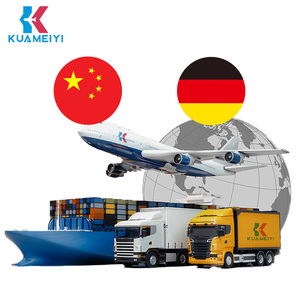
Heavy equipment logistics, breakbulk shipping, and over-dimensional cargo clearance for Indonesian mining and infrastructure projects.
As a premier licensed NVOCC and customs clearance broker (PPJK registered in Indonesia), we bridge bilateral trade flows between China and Southeast Asia's largest economy with absolute regulatory precision.
Unlike standard freight forwarders who subcontract customs procedures, we maintain direct regulatory licensing with Indonesian Customs (Direktorat Jenderal Bea dan Cukai). Our registered PPJK agents manage electronic data interchange (EDI) filings via the CEISA 4.0 platform directly.
Under the ASEAN-China Free Trade Area (ACFTA), eligible goods enjoy zero or reduced import duties. We ensure immaculate HS Code tariff alignment (BTKI 2022 format) and origin criteria verification to guarantee 100% duty preference acceptance at Indonesian entry ports.
From port de-consolidation in Jakarta or Surabaya to bonded trucking transport across industrial zones (Jababeka, MM2100, Karawang, Cikarang), our logistics fleet guarantees intact, time-definite delivery with end-to-end GPS visibility.
Optimizing logistics speed and freight expenditure requires detailed knowledge of China's origin ports and Indonesia's regional destination hubs. We manage dedicated liner contracts with major carriers including COSCO, EMC, YML, KMTC, and SITC.
| China Port of Origin | Indonesia Destination Hub | Mode of Transport | Avg. Transit Time | Primary Cargo Focus |
|---|---|---|---|---|
| Shenzhen / Nansha / Hong Kong | Tanjung Priok, Jakarta (IDJKT) | Direct Ocean Container (FCL/LCL) | 7 - 9 Days | Electronics, Consumer Goods, Textiles |
| Ningbo-Zhoushan / Shanghai | Tanjung Perak, Surabaya (IDSUB) | Direct Sea Express | 9 - 11 Days | Industrial Machinery, Hardware, Raw Materials |
| Qingdao / Tianjin / Ningbo | Belawan, Medan (IDMES) | Feeder / Direct Liner | 11 - 14 Days | Agricultural Equipment, Mining Spare Parts |
| Guangzhou (CAN) / Shenzhen (SZX) | Soekarno-Hatta Int'l (CGK) | Air Freight Cargo | 1 - 3 Days | High-Value Electronics, Samples, Pharmaceuticals |
| Shanghai (PVG) / Beijing (PEK) | Juanda Int'l, Surabaya (SUB) | Air Freight Express | 2 - 4 Days | Urgent Manufacturing Components & Automotive Parts |
Tanjung Priok handles over 60% of Indonesia's total containerized imports, leading to seasonal dwell time spikes. Our operational strategy utilizes secondary discharge terminals (such as NPCT1 or JICT) combined with pre-lodged electronic customs declarations to bypass terminal congestion and achieve under 48-hour container dwell times.
Indonesia enforces stringent non-tariff barriers and customs inspections. Navigating import permits, quota restrictions, and statutory tax obligations is critical to avoiding cargo seizures, re-exports, or prohibitive demurrage charges.
Indonesia utilizes the Buku Tarif Kepabeanan Indonesia (BTKI) 8-digit HTS code structure. Mismatches between Chinese 10-digit export codes and Indonesian BTKI subheadings are the primary trigger for Jalur Merah (Red Channel) physical inspections. Our compliance specialists perform pre-shipment classification audits to align document descriptions precisely.
Over 40% of imported tariff lines fall under Lartas (Larangan dan Pembatasan / Prohibited & Restricted Items). Importers must hold an active NIB (Nomor Induk Berusaha) acting as API-U (General Import License) or API-P (Producer Import License). Furthermore, specific commodities require Technical Verification (LS / Laporan Surveyor) or SPI (Surat Persetujuan Impor) from the Ministry of Trade prior to shipment departure.
Regulated products such as electrical appliances, steel products, automotive tires, and children's toys require mandatory SNI (Standar Nasional Indonesia) compliance marks. Food, cosmetics, and medical devices require prior registration with BPOM (Badan Pengawas Obat dan Makanan). Importing uncertified goods leads to immediate detention at customs entry points.
When goods arrive in Indonesia under standard DDU/CIF terms, import tax assessment follows strict statutory formulas calculated on the CIF (Cost, Insurance & Freight) value converted to IDR (KURS PAJAK):
| Tax Component | Standard Statutory Rate | With ACFTA Form E Exemption | Calculation Basis |
|---|---|---|---|
| Import Duty (Bea Masuk) | 5% - 30% (Varies by HTS Code) | 0% - 5% (Preferential Rate) | CIF Value × Duty Rate % |
| Value Added Tax (PPN) | 11% | 11% (Mandatory) | (CIF Value + Import Duty) × 11% |
| Income Tax (PPh Art 22) | 2.5% (With valid API-U / NIB) / 7.5% - 10% (Non-API) | 2.5% (With valid API / NIB) | (CIF Value + Import Duty) × PPh Rate % |
Indonesia's rapid economic growth drives diverse logistics requirements across key industrial sectors. Below are real-world supply chain engineering applications designed for local operating conditions.
Challenge: Transporting breakbulk excavator fleets, crushing plants, and nickel processing equipment to remote island sites with minimal infrastructure.
Our Solution: Multimodal heavy-lift shipping from Shanghai to Morowali or Weda Bay, handling specialized customs clearance for capital goods, landing craft tank (LCT) river transport, and site delivery.
Challenge: High glass fragility risks, large volumetric storage, and complex SNI verification requirements for utility-scale solar farms.
Our Solution: Specialized shock-mounted FCL container transport, pre-shipment Surveyor Inspection (LS) coordination in China, duty minimization via Form E, and synchronized site-drop delivery.
Challenge: Strict hazardous cargo (Class 9 Lithium-ion) regulations, climate-controlled warehousing, and quick-turnaround production line delivery.
Our Solution: UN-certified DG air and ocean packaging, dangerous goods approval with shipping lines, temp-controlled bonded warehousing in Jakarta, and JIT (Just-in-Time) factory feeder delivery.
Challenge: De minimis value rules tightening (Indonesia lowered tax-free threshold to $3 USD) causing massive customs backlog for individual parcels.
Our Solution: B2B bulk import consolidation, full DDP clearance under legal Indonesian enterprise entities, localized sorting, and last-mile integration with J&T, Sicepat, and JNE delivery networks.
Staying ahead in the Indonesian market requires continuous adaptation to evolving trade policies, digitalization initiatives, and national industrialization mandates.
Indonesian Customs has fully transitioned to the CEISA 4.0 ecosystem. System algorithms automatically flag discrepancies between weights, values, and HTS codes. Real-time data synchronization between Chinese export manifests and Indonesian import filings is now mandatory.
Following Law No. 33/2014 on Halal Product Assurance, mandatory halal certification enforcement expands progressively across imported food, beverages, cosmetics, and pharmaceuticals. Foreign supply chains must integrate accredited halal logistics documentation.
Indonesia's ban on raw mineral exports requires localized processing. This drives immense import demand for Chinese high-tech smelting machinery, industrial chemicals, and heavy infrastructure components benefiting from masterlist tax concessions.
To reduce port dwell times, regulatory authorities are moving selected non-tariff barrier checks (Lartas) from border entry points to post-border warehouse audits. Enterprise compliance integrity and audit-proof paperwork have become essential.
Clear answers to common questions about importing goods, managing customs clearance, and optimizing logistics costs.
Jalur Merah (Red Channel) triggers physical cargo inspection and document audits by customs officers. Key causes include: (1) First-time importers or new NIB registrants, (2) High-risk commodity classifications, (3) Valuation discrepancies compared to customs reference databases, (4) Inconsistencies between Form E certificates and commercial invoices, or (5) Random automated risk engine sampling under CEISA 4.0. Working with a licensed PPJK broker minimizes document errors that flag system audits.
Form E issued under the ASEAN-China Free Trade Area allows eligible products manufactured in China to enter Indonesia at zero or drastically reduced import duty rates (often dropping standard 15%-25% duties down to 0%-5%). To be accepted, the document must strictly satisfy rules of origin (e.g., Regional Value Content ≥ 40%), contain matching HTS codes, match shipping routes without unauthorized transshipment, and be submitted electronically to Indonesian Customs prior to cargo clearance.
Under DDU (Delivered Duty Unpaid), the seller pays international freight, but the buyer in Indonesia remains legally responsible for holding import licenses (API/NIB), clearing customs, and paying all duties, PPN (11%), and PPh (2.5%-10%). Under DDP (Delivered Duty Paid), our company handles the entire process: we act as the importer of record (Undername / Import License Sharing if needed), clear customs through our PPJK clearance license, settle all duties and taxes, and deliver directly to the client's door with zero hidden fees.
SNI certification involves factory audits in China, product testing in accredited Indonesian laboratories, and bureaucratic review by certifying bodies (LSPro). The process typically takes between 2 to 4 months depending on the product category. For businesses needing immediate market access, we assist in identifying certified factory partners or arranging compliant interim logistics frameworks.
As a rule of thumb, when cargo volume exceeds 13 to 15 Cubic Meters (CBM), Full Container Load (FCL 20ft) becomes more cost-effective than Less than Container Load (LCL). Furthermore, FCL minimizes cargo handling risks, eliminates port de-consolidation delays (CFS dwell time), and reduces exposure to customs Red Channel holds caused by third-party co-loaded cargo inside a shared container.
Yes. We manage Class 3, 6, 8, and 9 dangerous goods (including Lithium batteries, industrial solvents, and chemical reagents). Our team manages UN packaging verification, MSDS translation, carrier dangerous goods approvals, and specialized DG storage at origin ports and destination hubs in Jakarta and Surabaya.
Navigating cross-border logistics between China and Indonesia requires a reliable partner. We combine physical infrastructure with digital tracking tools to optimize every step of your supply chain.
With primary operational control centers in Ningbo, Shenzhen, and Shanghai, combined with licensed customs brokerage branch offices in Jakarta (Tanjung Priok) and Surabaya (Tanjung Perak), we provide hands-on accountability at both ends of the shipping lane.
Our dedicated trade compliance desk conducts pre-declaration audits on every commercial invoice, packing list, and Form E draft before your vessel departs China. This proactive approach eliminates high-penalty customs queries and port detention fines.
Eliminate unexpected destination charges. We provide all-inclusive freight quotations detailing sea freight, THCs, documentation fees, PPJK brokerage charges, import duty estimates, and local door delivery rates upfront.
Cargo HTS classification, Form E eligibility review, import permit verification (Lartas), and landed cost calculation.
Factory pickup across China, container stuffing, origin customs export filing, and Form E issuance.
Real-time vessel GPS tracking and pre-lodgement of electronic customs declarations via CEISA 4.0 EDI system.
Customs duty settlement, green channel release, container drayage, and final last-mile delivery to your warehouse.
Contact our senior logistics engineers today for a complete tariff assessment, Form E optimization review, or instant door-to-door DDP quotation.
Get a Quote