 English
 Español English Español

Our heavy-duty intermodal containers and specialized transport units are custom-engineered for seamless transfer between marine vessels at the Port of Nagoya, JR Freight rail networks, and Aichi prefectural trucking routes.

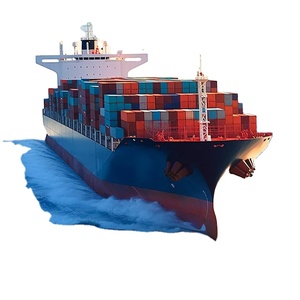
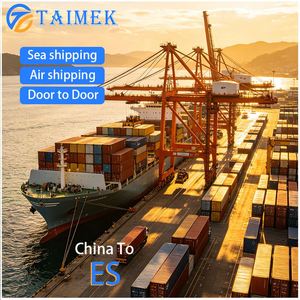
As the primary industrial gateway of Japan's Chubu economic region, the Port of Nagoya handles over 100 million metric tons of freight annually, anchored heavily by the Aichi Prefecture automotive cluster (Toyota Motor Corporation, Denso, Aisin) and advanced machine tool manufacturers. Connecting Chinese industrial manufacturing bases in Ningbo-Zhoushan, Shanghai, and Qingdao to the Port of Nagoya requires intermodal equipment designed to handle intense maritime stress, rapid chassis transfer, and strict compliance with Japanese Ministry of Land, Infrastructure, Transport and Tourism (MLIT) highway weight restrictions.
As a leading Chinese intermodal equipment manufacturer, our factory merges high-precision steel fabrication with certified maritime engineering. We specialize in producing ISO-compliant 20ft, 40ft, and 45ft dry cargo containers, swap bodies, flat racks, and ISO tank units designed to streamline the entire supply chain—from Chinese factory loading docks across the East China Sea directly onto JR Freight trains and Ise-Wangan Expressway transport chassis in Nagoya.
With Japan's implementation of strict overtime caps on truck drivers (the "2024 Problem"), logistics operators in Nagoya are rapidly transitioning from long-haul trucking to Ocean-Rail Intermodal Coastal Feeder Networks. Our custom-engineered 31ft and 45ft swap-body containers allow seamless interlining between coastal feeder vessels arriving at Nagoya Tobishima Pier and JR Freight trains, reducing manual driver handling and expanding per-unit payload capacity by up to 22%.
Intermodal containers bound for Nagoya must endure harsh marine salt spray environments and heavy dynamic loads during high-speed rail transit across JR Central tracks. Our manufacturing process enforces rigorous material and metallurgical benchmarks:
| Engineering Component | Chinese Manufacturing Benchmark | Japanese & Global Compliance Standard |
|---|---|---|
| Corrugation & Frame Steel | SPA-H Corten Atmospheric Corrosion-Resistant Steel | JIS G3125 / ISO 6346 Structural Integrity |
| Coating & Surface Treatment | Zinc-Rich Epoxy Primer + High-Build Polyurethane Topcoat (120μm) | ISO 12944 C5-M Heavy Marine Durability Rating |
| Floor Payload Capacity | 28mm Heavy-Duty Hardwood Plywood or Steel Plate (7,200kg Axle Load) | ISO 1496-1 Heavy Forklift Loading Approval |
| Corner Castings | Drop-Forged Special Weldable Steel (SCW480) | ClassNK, ABS, BV, CSC Plate Certified |
| Dimensional Compatibility | Pallet-Wide Internal Width (2,440 mm) | Optimized for Dual T11 (1,100mm × 1,100mm) Pallet Stacking |
Our intermodal containers are engineered specifically to match the logistical dynamics of Aichi, Gifu, and Mie prefectures. Below are four key industrial deployment scenarios in the local Nagoya ecosystem:
Aichi Prefecture is world-renowned for Just-In-Time (JIT) automotive production. Our 45ft Pallet-Wide High Cube Intermodal Units fit precisely 30 standard Japanese T11 pallets with zero wasted side-gap. Sub-assemblies, stamping dies, and powertrain components sourced from Chinese factories in Ningbo or Taizhou are sealed in China, shipped directly to Port of Nagoya (Tobishima Terminal), and hauled via the Ise-Wangan Expressway directly to factory floors without destuffing at intermediate warehouses.
Nagoya and surrounding Chubu cities (such as Inuyama and Komaki) produce high-precision CNC lathes, stamping presses, and industrial robotic arms. Utilizing our Collapsible Flat Racks and Heavy Duty Open Top Containers, machinery manufacturers safely transport out-of-gauge (OOG) equipment. Reinforced 4-ton floor lashing rings prevent micro-shifting during marine transport across the rough sea states of the East China Sea.
The neighboring Yokkaichi chemical complex relies on steady intermodal bulk liquid feeds. Our T11 and T14 ISO Tank Containers feature steam-heating jackets, insulated 316L stainless steel vessels, and ClassNK-certified safety relief valves. Liquid resins, lubricants, and high-purity chemical solvents are safely transported intermodally between Chinese chemical parks and Chubu storage terminals under strict IMDG regulations.
For sensitive electronic micro-components and high-value perishable materials moving through Centrair or Nagoya Port, our Smart Reefer Intermodal Units incorporate real-time GPS telemetry, dual temperature sensors, and humidity control options. Logistics managers in Nagoya track temperature stability (+/- 0.1°C precision) and receive instant automated shock alerts via IoT cloud integration during rail and road handoffs.
Navigating the evolving commercial landscape in Central Japan requires understanding four major macro-environmental shifts currently redefining Nagoya's supply chain requirements:
Our state-of-the-art manufacturing facility in East China combines advanced robotic production technology with comprehensive international shipping logistics expertise. Here is how we deliver superior value to importers and logistics operators serving the Nagoya market:
Every intermodal unit undergoes fully automated robotic welding to ensure 100% continuous, watertight structural seams. Steel frames undergo SA 2.5 full automatic shot-blasting to remove all mill scale and rust prior to zinc-rich primer application, preventing internal coating delamination over extended sea voyages.
Our products carry official approval plates from internationally recognized classification societies, including ClassNK (Japan Maritime Society), Bureau Veritas (BV), American Bureau of Shipping (ABS), and Lloyd's Register (LR). Every container features a valid CSC (Container Safety Convention) plate for immediate global interchange.
Beyond container manufacturing, we operate as a licensed Non-Vessel Operating Common Carrier (NVOCC). We provide comprehensive freight forwarding, bonded warehousing, DDP customs brokerage, and direct door-to-door delivery from Chinese factory gates to end-user locations across Nagoya, Mie, and Shizuoka prefectures.
Get instant answers to critical questions regarding container specs, customs clearance, JR Rail compliance, and shipping transit to Nagoya Port:
Japanese railways (JR Freight) operate on a narrow gauge (1,067mm) with stricter height and width envelope restrictions compared to North American or European rail networks. We manufacture custom 31ft and specialized 20ft intermodal swap bodies built with specific corner fitting offsets and lowered floor profile heights that strictly adhere to JR Freight structural gauge templates, ensuring direct railcar loading without special route permits.
Direct liner services from major East China sea hubs (Ningbo-Zhoushan, Shanghai) to the Port of Nagoya (Tobishima or Nabeta Pier) average between 3 to 5 days in transit. Our NVOCC logistics team handles container booking, ISF/customs pre-filing, and harbor drayage to ensure immediate clearance upon vessel discharge.
Yes! Our standard ISO dry containers feature normal internal dimensions, but we specifically produce Pallet-Wide Intermodal Containers with an internal width of 2,440 mm. This subtle internal enlargement allows exactly two 1,100mm × 1,100mm (T11) Japanese standard pallets to sit side-by-side without overhang or dead space, maximizing payload volume up to 30 pallets in a single 45ft unit.
All structural corrugation panels, corner posts, and top/bottom rails are constructed using authentic SPA-H Corten steel. After surface shot-blasting to SA 2.5 standard, we apply a multi-coat marine paint system: a zinc-rich epoxy primer coating (30μm), an intermediate epoxy build coat (40μm), and a high-durability acrylic polyurethane topcoat (50μm), providing a total dry film thickness (DFT) exceeding 120μm for superior salt-spray corrosion resistance.
Absolutely. We offer complete OEM customization. You can select custom RAL paint shades, specify high-resolution corporate decal placement, and request pre-installed IoT telematics devices (door open/close magnetic sensors, GPS/GLONASS tracking, temperature & humidity logging, and impact shock accelerometers) directly on the factory assembly line.
Yes. Through our integrated NVOCC and customs brokerage network, we provide turnkey DDP delivery services. We manage export customs in China, ocean freight, Japanese import customs clearance, consumption tax handling, port storage fees, and final-mile flatbed/chassis delivery directly to your plant or warehouse in Nagoya and surrounding prefectures.
Contact our engineering and sales experts today to request detailed CAD drawings, factory price lists, or custom NVOCC shipping quotes tailored to your specific logistics requirements.