 English
 Español


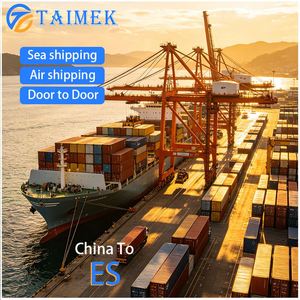
1. Strategic Overview: The China-to-Houston Logistics Corridor
The global trade pipeline connecting manufacturing clusters across China (such as the Yangtze River Delta and Pearl River Delta) directly to the U.S. Gulf Coast represents one of the most critical supply chain arteries for industrial, energy, and commercial goods. As North America's premier energy capital and container gateway, the Greater Houston Market demands highly synchronized export clearance from China origin factories alongside flawless U.S. Customs & Border Protection (CBP) clearance at local terminals including Barbours Cut and Bayport Container Terminal.
Navigating this corridor requires more than generic freight booking; it demands an integrated supply chain model. Utilizing factory-side export validation in China combined with licensed Non-Vessel Operating Common Carrier (NVOCC) ocean transportation and U.S. customs brokerage ensures that importers avoid prohibitive demurrage, eliminate Section 301 tariff misclassifications, and secure end-to-end door-to-door delivery (DDP).
2. Architecture of China Factory Export Clearance Operations
Before any container boards an ocean vessel or air cargo freighter, rigorous origin-side protocols must take place. Export clearance factories in China operate under strict General Administration of Customs (GACC) frameworks. Securing seamless export declaration involves five essential operational vectors:
Customs Documentation Accuracy
Matching Commercial Invoices, Packing Lists, and Certificates of Origin (CO) to HS Codes ensures no discrepancies during GACC export auditing or CBP import entry.
First-Leg Drayage & Stuffing
Coordinating factory loading with certified export container yards prevents late-return port penalties and guarantees vessel cutoff adherence.
EAD & License Compliance
Export Adjustment Declarations (EAD) and dual-use item licensing for advanced machinery or chemicals clear regulatory checkposts instantly.
3. Technical Comparison: Freight Modes Serving Houston Buyers
Selecting the optimal transportation architecture depends on cargo volume, commodity type, margin structure, and strict delivery timelines. The table below outlines trade-offs between ocean FCL, LCL, Air Cargo, and turnkey DDP services servicing the Houston metropolitan area and Gulf Coast energy belt.
| Shipping Mode | Average Transit (China to Houston) | Customs Risk Level | Ideal Cargo Application | Cost Efficiency Rank |
|---|---|---|---|---|
| Full Container Load (FCL) | 24 - 28 Days (All-Water) | Low (Sealed at Factory) | Bulk industrial goods, heavy equipment, raw materials | Highest (Cost per CBM) |
| Less than Container Load (LCL) | 30 - 35 Days (Includes Deconsolidation) | Medium (CFS Inspection Risk) | Mid-sized commercial shipments (3 - 14 CBM) | Moderate |
| DDP Air Freight Express | 4 - 7 Days (Via IAH Airport) | Minimal (Pre-cleared) | Critical spare parts, oilfield tools, high-value electronics | Premium Investment |
| Turnkey DDP Ocean Door-to-Door | 28 - 32 Days (Factory to Site) | Zero Importer Friction | E-commerce fulfillment, industrial supplies, machinery | High Value Predictability |
4. Localized Houston Market Application Scenarios
Houston is not merely a regional population center; it is a global trade hub housing the Texas Medical Center, the Port of Houston Energy Corridor, and vast manufacturing ecosystems spanning Pasadena, Baytown, Katy, and Sugar Land. Export clearance factories in China cater specifically to several high-value sectors operating throughout Southeast Texas:
A. Oilfield Equipment & Petrochemical Hardware
Houston's energy sector relies on specialized valves, drill collars, API-rated steel tubing, and heat exchangers manufactured in Chinese industrial hubs like Jiangsu and Shandong. China export clearance facilities ensure non-destructive testing (NDT) documentation and mill test reports (MTR) are attached to customs filings, preventing holds by the U.S. International Trade Commission or CBP inspectors.
B. Renewable Energy & Heavy Industrial Components
With massive solar and wind energy projects scaling across Texas, China factories provide specialized export clearance for photovoltaic (PV) mounting systems, battery energy storage systems (BESS), and structural steel. Navigating anti-dumping and countervailing duties (AD/CVD) on aluminum and steel components requires precise HTS classification by qualified customs brokers before ocean departure.
C. Commercial Goods & E-Commerce Fulfillment
Consumer goods, furniture, building materials, and electronics destined for Amazon fulfillment centers or localized distribution hubs along I-10 and I-45 benefit immensely from DDP (Delivered Duty Paid) ocean solutions. Cargo moves smoothly from factory floor, through origin clearance, past Port of Houston terminals, right into local distribution warehouses.
5. The 5-Stage China-to-Houston Supply Chain Workflow
To eliminate operational ambiguity, our standardized logistics framework manages every milestone from factory floor authorization to final tailgate delivery in Texas:
Origin validation, volumetric checks, and booking confirmation with FMC-licensed ocean lines.
GACC filing, export license audit, and timely origin port customs sign-off.
Transpacific navigation with early ISF 10+2 submission to eliminate CBP non-compliance fines.
Automated Commercial Environment (ACE) entry, duty settlement, and clearance release.
Direct container drayage or deconsolidated truckload delivery across Greater Houston.
6. Regulatory Compliance & Foreign Trade Zone (FTZ #84) Advantages
Importers bringing goods into the Houston market can drastically optimize cash flow by utilizing Foreign Trade Zone (FTZ) #84 procedures. Goods cleared for export from China can enter designated FTZ warehouse sites in Houston without immediate payment of customs duties or Section 301 tariffs.
Key financial benefits of leveraging FTZ operations include:
- Duty Deferral: Duties are paid only when products enter U.S. commerce for final consumption.
- Duty Elimination on Re-Exports: If goods are consolidated in Houston and re-exported to Latin America or Mexico, U.S. duties are completely waived.
- Weekly Entry Savings: Consolidating multiple container arrivals into a single weekly entry entry fee significantly reduces Merchandising Processing Fees (MPF).
7. E-E-A-T Organizational Advantage: Why ShipLilly / Lilly Associates
With decades of experience acting as an accountable, single-source logistics operator, our team bridge the operational gap between Chinese manufacturing networks and American enterprise buyers. Operating as a licensed NVOCC and licensed Customs Broker, we offer:
1. Transparent Multi-Carrier Ocean Contracting: Volume contract leverage across ocean alliances guarantees space allocation even during peak shipping seasons.
2. Bilingual Technical Support: Dedicated coordinators operating fluently across English, Spanish, and Mandarin ensure clear communications across all time zones.
3. End-to-End Account Integrity: One point of contact, one master invoice, and complete operational transparency eliminate the headaches of managing separate forwarders, brokers, and drayage fleets.