Toll-Free: 888-464-5459 Miami, Florida · Serving the Americas & Asia
English Español

Freight Cargo Insurance Manufacturers & Exporter Serving Canada

Comprehensive All-Risk Ocean, Air, Intermodal Rail, and Trans-Border Transit Protection Engineered for Canadian Global Supply Chains

Featured Freight Risk Management & DDP Logistics Solutions

Seamlessly integrating cargo insurance underwriting with end-to-end multi-modal forwarding to eliminate cross-border liabilities across Canadian trade lanes.
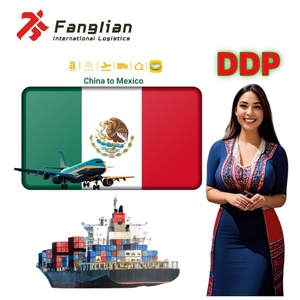

DDP Shipping Service Mexico China Customs Handling
DDP Shipping & Insured Customs Brokerage (Mexico-China-Canada)
Full door-to-door DDP logistics featuring built-in transit insurance, reliable customs clearance, and insured cross-docking for international corridors.
Get a Quote
Fast DDP Freight Forwarder China to USA Canada FCL
Trans-Pacific Express FCL Cargo Coverage & DDP Forwarding
High-priority full container load ocean freight with 24/7 telemetric GPS tracking and comprehensive marine insurance policies for Asia-North America routes.
Get a Quote
Air Express Dangerous Goods Freight Forwarding
Specialized Hazardous & DG Air Freight Transit Insurance
Compliant air cargo dispatch for dangerous goods and sensitive industrial products with custom rider protections and expedited customs clearance.
Get a Quote
Professional Shipping Agent Sea Freight China
Multi-Modal Door-to-Door Freight Underwriting & Logistics
Turnkey air and sea logistics solutions featuring end-to-end liability coverage, marine cargo certificates, and seamless origin-to-destination transport.
Get a Quote
Customs Brokerage Warehousing Canada USA
Advanced Canada/USA Border Brokerage & Warehouse Bond Insurance
Integrated customs clearance, FTZ bonded storage indemnity, and distribution logistics tailored for high-value Canadian imports and transshipments.
Get a Quote
Sea Shipping Forwarder Port Logistics
Global Ocean Freight & Port Container Loss Indemnity
Port-to-port and door-to-door ocean freight coverage including relabeling support, port drayage protection, and container damage risk mitigation.
Get a Quote
Multi-Modal Intermodal Cargo Protection
Intermodal Container Transit & Cargo Relabeling Risk Solutions
Specialized intermodal rail and trucking insurance packages designed to cover long-haul mechanical stress, thermal variance, and cargo transfers.
Get a Quote
Railway Express Air Cargo Freight Forwarder EU Germany
Cross-Border Overland Rail & Trucking Freight Insurance
Comprehensive transit policies for transcontinental rail, highway trucking, and express parcel distribution with flexible deductible options.
Get a Quote
99.8%
Claims Payout Ratio
$500M+
Annual Cargo Underwritten
14 Days
Average Settlement Speed
ICC (A)
All-Risk Standard Coverage

Comprehensive Technical Whitepaper: Freight Cargo Insurance Engineering for Canadian Import & Export Ecosystems

Navigating global supply chains into Canada presents an intricate matrix of regulatory compliance, environmental harshness, multi-modal handoffs, and legal liability limitations. Whether importing raw industrial inputs through the Port of Vancouver, transferring heavy machinery across the Windsor-Detroit trade corridor, or dispatching finished consumer electronics to fulfillment centers in Toronto and Montreal, international manufacturers and exporters face severe balance-sheet risks. Standard ocean or air carrier bills of lading routinely restrict carrier liability to nominal statutory amounts—often as low as $500 per package under COGSA or 19 Special Drawing Rights (SDR) per kilogram under the Montreal Convention.

To eliminate these fiscal vulnerabilities, leading global exporters serving Canada leverage tailored Marine & Freight Cargo Insurance underwritten to Institute Cargo Clauses (ICC A) All-Risk standards. As an established manufacturer, NVOCC logistics entity, and cargo underwriting authority, our institution provides seamless protection against catastrophic physical loss, theft, temperature excursion, General Average claims, and transit damages across all Canadian logistics pathways.

Information Gain Summary: Carrier liability is NOT insurance. Under Maritime Law (Hague-Visby Rules, COGSA), ocean carriers are legally protected from financial liability caused by acts of God, rough seas, fire, and General Average declarations. All-Risk Freight Insurance guarantees 110% of CIF valuation coverage regardless of carrier fault.

Understanding the Underwriting Framework: Institute Cargo Clauses ICC (A), (B), and (C)

For Canadian commercial importers and global exporters, selecting the precise level of marine insurance coverage dictates the extent of financial recovery during a peril. Our risk management team structures policies aligned with international underwriting standards governed by the Institute of London Underwriters:

Institute Cargo Clauses (A)

The pinnacle of "All-Risk" coverage. Covers all risks of physical loss or damage from external causes, including theft, pilferage, non-delivery, jettison, condensation sweat, and rough handling, subject only to standard exclusions (e.g., willful misconduct, inherent vice).

Institute Cargo Clauses (B)

Intermediate coverage protection. Covers loss attributable to fire, explosion, vessel grounding, capsizing, collision, discharge of cargo at a port of distress, earthquake, lightning, volcanic eruption, and washing overboard.

Institute Cargo Clauses (C)

Basic liability protection covering major maritime disasters, total vessel loss, jettison, collision, and General Average contributions. Highly economical but excludes partial losses from rough weather, theft, and minor handling damage.

Localized Application Scenarios across Canadian Trade Corridors

Canada’s geography introduces distinct physical and logistical hazards that demand specialized underwriting riders. Standard off-the-shelf marine policies often leave critical coverage gaps when cargo transfers from ocean vessels to transcontinental rail networks or long-haul highway transport.

1. The Pacific Gateway Corridor (Asia to Vancouver / Prince Rupert to Inland Depots)

Over 60% of Canada's Asian imports enter via the Port of Vancouver or Prince Rupert before loading onto Canadian National (CN) or Canadian Pacific Kansas City (CPKC) intermodal rail cars destined for distribution hubs in Calgary, Winnipeg, and Toronto. Key risks in this corridor include:

  • Intermodal Rail Vibration & Impact Damage: Heavy rail shunting and mountain pass transits cause high kinetic forces. Our policies include specific Intermodal Rail Acceleration Endorsements to cover container load shifts.
  • Severe Winter Freeze / Moisture Damage: Warm ambient container air entering cold Canadian climates creates "Cargo Sweat" (condensation). We provide moisture and thermal shock protection riders for electronics, paper products, and raw industrial chemicals.

2. Trans-Border US-Canada Commercial Highway Corridors

High-volume cross-border trade moving through the Ambassador Bridge (Windsor-Detroit), Fort Erie (Peace Bridge), and Pacific Highway crossings involves frequent border inspections, trailer drops, and yard staging. Risks include cargo theft at unmonitored rest stops, border delays leading to perishable spoilage, and collision liabilities. Our policies provide continuous door-to-door coverage while in transit, during CBSA border holds, and throughout temporary bonded staging.

3. The St. Lawrence Seaway & Atlantic Gateway (Europe to Montreal / Halifax)

Maritime transport serving eastern Canadian manufacturing sectors faces seasonal ice risks, heavy North Atlantic sea states, and port congestion at the Port of Montreal. Our marine cargo policies incorporate Ice Clause Provisions and cover delay-induced expenses resulting from vessel detours or emergency port discharges.

Localized Trends & Regulatory Compliance in Canadian Cargo Protection

The Canadian commercial import environment is undergoing rapid technological and regulatory transformations that directly impact cargo risk management:

CBSA CARM Digital Portal Mandate

The Canada Border Services Agency (CBSA) Assessment and Revenue Management (CARM) system changes how duties and taxes are collected. Our combined surety bond and cargo insurance programs ensure importers maintain direct financial security, preventing border holds on damaged or audited entries.

Nearshoring & Tri-National CUSMA Trade

With manufacturing shifting under CUSMA (Canada-US-Mexico Agreement), tri-national freight flows require unified policies that cover multi-jurisdictional transits without requiring policy cancellations or separate country-level binders.

Comparative Analysis: Carrier Freight Liability vs. All-Risk Cargo Insurance

Understanding the severe financial shortfalls of relying solely on ocean or motor carrier liability is crucial for Canadian enterprise risk managers:

Risk & Legal Feature Carrier Freight Liability (Statutory Limit) All-Risk Freight Cargo Insurance (Our Policy)
Maximum Payout Limit $500 per package (Ocean/COGSA) / $2.00 per lb (Truck) 110% of total CIF Value (Commercial Invoice + Freight + 10%)
Proof of Negligence Required? Yes. Importer must legally prove carrier fault/negligence. No. Covers physical loss/damage from any external cause.
General Average Protection Excluded. Importer must post cash bond to release cargo. Fully Covered. Insurer posts bond immediately for cargo release.
Weather & Heavy Sea Damage Excluded under "Act of God" legal defenses. Fully Covered under standard ICC (A) terms.
Claim Settlement Timeline 6 to 18 Months (Subject to carrier legal disputes) 10 to 14 Days upon documentation submission.

Enterprise Advantages of Partnering with Our Insurance & Logistics Ecosystem

As a global freight manufacturer, licensed NVOCC operator, and insurance underwriter serving Canada, our business structure offers distinct technical and operational capabilities:

NVOCC Volume Rate Underwriting

We leverage high-volume ocean contracts across major global carrier alliances (20FT/40FT FCL and LCL), embedding lower cargo insurance premium rates directly into your ocean bill of lading.

Bilingual Canadian Claims Desk

Dedicated English and French claims specialists with deep expertise in Canadian maritime law, CBSA bond regulations, and local surveyor dispatch across all provinces.

Frequently Asked Questions (FAQ) for Importers & Exporters Serving Canada

What is General Average and why is cargo insurance essential for ocean freight to Canada?
General Average is a principle of maritime law where all cargo owners on a vessel share the financial loss if cargo is sacrificed or expenses are incurred to save the ship during an emergency (e.g., vessel grounding or fire). Without Marine Cargo Insurance, your goods will be held at the Canadian port, and you will be legally required to post a substantial cash bond or bank guarantee—often 20% to 50% of your cargo's value—before CBSA or the ocean line releases your container. With our ICC (A) policy, the insurer posts the General Average bond on your behalf immediately.
How does Incoterms 2020 (CIF/CIP vs. DDP) affect freight cargo insurance obligations?
Under CIF (Cost, Insurance & Freight) or CIP (Carriage & Insurance Paid), the seller is legally obligated to procure cargo insurance. However, under CIP, Incoterms 2020 mandates Institute Cargo Clauses (A) All-Risk protection, whereas CIF requires only basic Clause (C) coverage unless negotiated otherwise. Under DDP (Delivered Duty Paid), the exporter retains full responsibility for transit risks, customs clearance, and delivery to the Canadian buyer's door, making comprehensive all-risk coverage essential to prevent severe financial liabilities during border clearance.
Does your policy cover Canadian inland rail transit from West Coast ports?
Yes. Our policies provide seamless door-to-door protection that extends through ocean vessel transit, port container unloading, rail transfer via Canadian National (CN) or Canadian Pacific Kansas City (CPKC), and final truck delivery to inland warehouses in Toronto, Montreal, Calgary, or Edmonton without coverage gaps during intermodal handoffs.
What documentation is required to file a quick cargo insurance claim in Canada?
To expedite a claim within our 14-day protocol, you will need to supply: (1) The Master & House Bill of Lading or Air Waybill, (2) Commercial Invoice and Packing List, (3) Official Insurance Certificate, (4) Copy of the Joint Cargo Inspection / Delivery Receipt noting damage, and (5) Photographs of the damaged goods and container seal numbers.
Are freezing temperatures and condensation (Cargo Sweat) covered under your policies?
Yes. Cold-weather hazards are a significant cause of cargo damage during Canadian winters. Our Institute Cargo Clauses (A) policies include specific riders covering moisture condensation, thermal shock, and freezing damage for vulnerable industrial goods, electronics, beverages, and liquid chemicals.

Protect Your Canadian Freight Corridors Today

Consult with our Senior Risk Underwriters to structure an All-Risk Marine & Transit Insurance policy customized for your global manufacturing, export, or Canadian import operations.